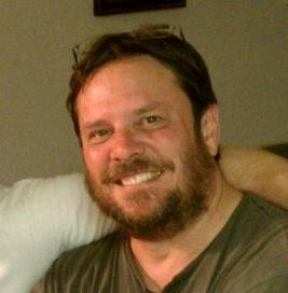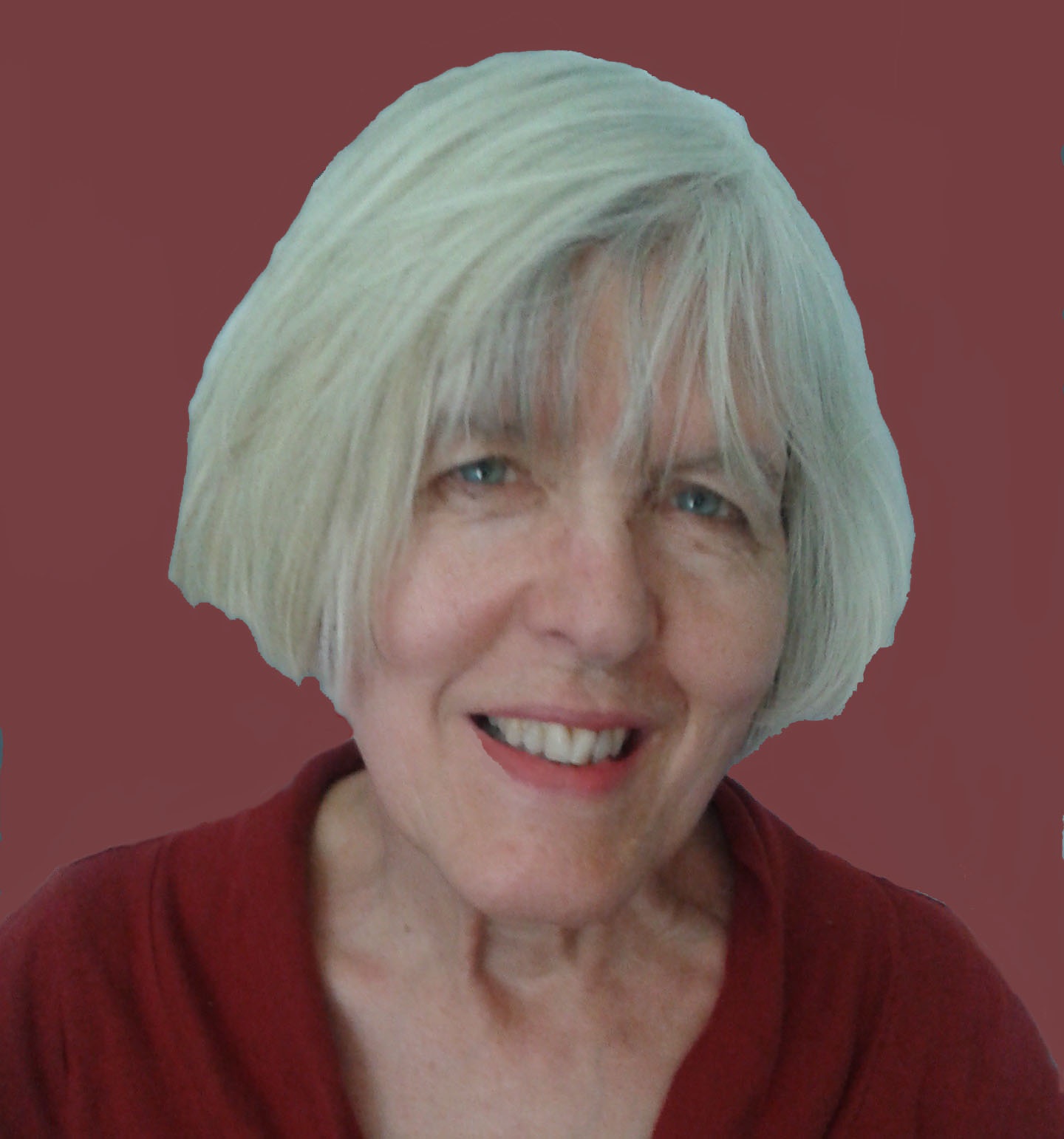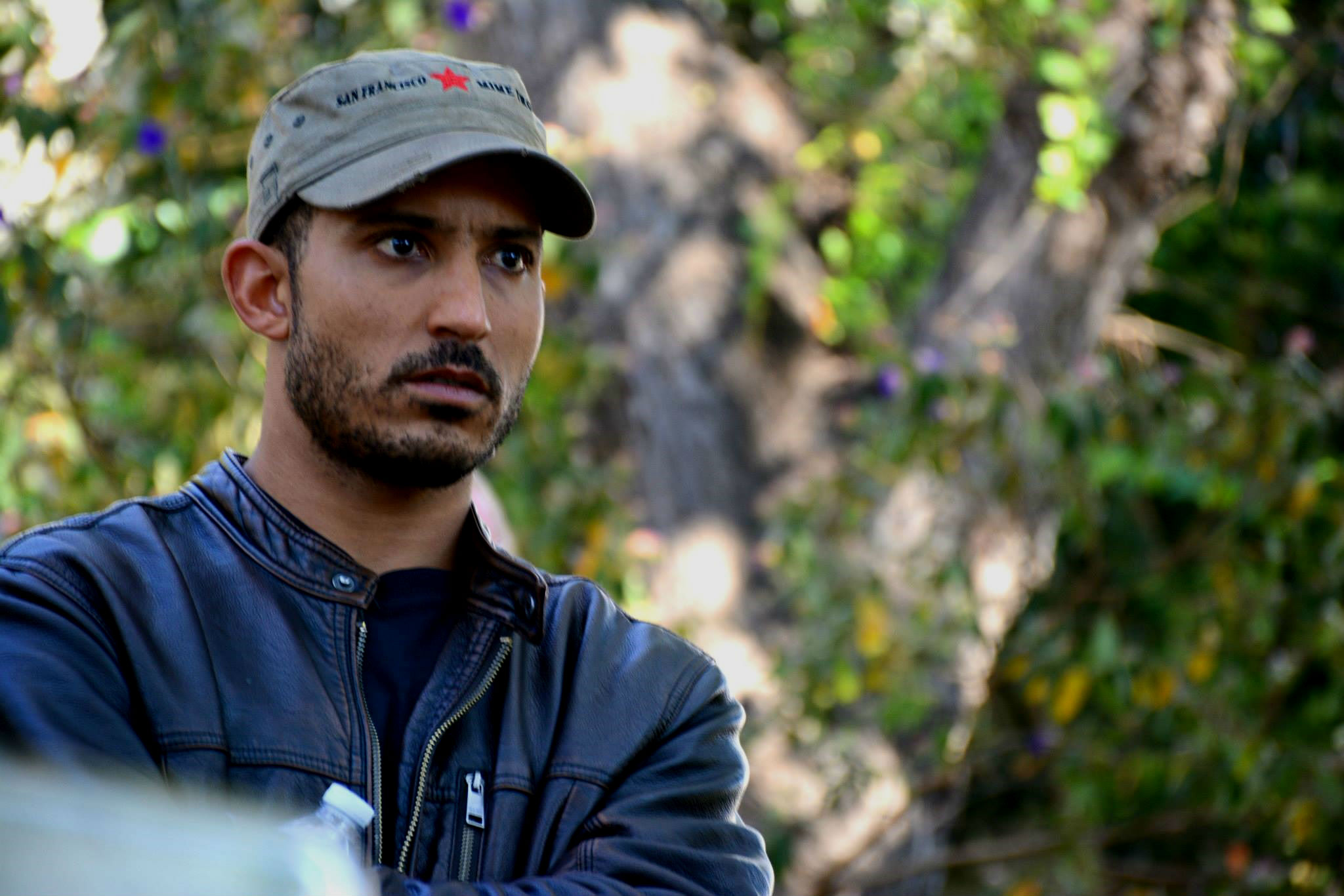
T.M. Scruggs

Please follow and like us:
T. M Scruggs

T. M Scruggs


Executive Producer at The Real News; ethnomusicologist; Professor Emeritus, University of Iowa; volunteer for community radio stations in U.S., Nicaragua and Venezuela.


My name is T.M. Scruggs and I am running as a Listener Candidate for the KPFA Local Station Board.  I am an educator, musician, and long time social activist involved in community/non-profit media since the mid-1970s. I am a Bay Area native familiar with the issues of our region.

My various forms of organizing and cultural work have proven to me that media is the crucial battleground for providing information and framing issues that determines a society’s political direction. The non-corporate perspective and original investigative reporting that KPFA and sister stations disseminate is an indispensable resource that should be available in every city.

Pacifica’s problems need to be resolved to unleash its full potential. My second career is in finances: I started a successful, growing non-profit. A top priority in my mind is straightening out the financial mess that plagues KPFA and Pacifica.

In recent years I have worked with building The Real News Network (TRNN) where I am Executive Producer. Our project centers around our internet video news site. Our studios, still a work-in-progress, are in Baltimore, and hopefully we can expand to our next choice, Oakland.  I am also on the Board of Advisers of the print-based news site  Truth Out.

KPFA, and Pacifica in general, needs to take more advantage of the internet to help our progressive message and programming reach the broadest possible audience.  KPFA has recently upgraded its web page, an excellent step in a direction with great promise for the future.  This use of newer technology, together with further strengthening of our internship program, will help increase more youth participation, a clear necessity.

I speak fluent Spanish (self-taught in one of the major cities of Latin America: Chicago) and much of my activism has involved Latino communities.  I taught, and did research and solidarity work for several years in Central America and Venezuela.  As the Latino populations around Richmond and San Pablo become “the new Mission” we need to work to include these important communities in KPFA programs and activities.

We can overcome the unnecessary divisiveness that seems to exist between our strong staff and amazing volunteers. Besides my executive-type experience with The Real News, I have both staff and volunteer experience in leftist and community organizations.

Graphic from KBOO Radio's facebook page.

Graphic from KBOO Radio’s Facebook page.

I volunteered on community radio in every city I have lived in since high school: KBOO (Portland; hosted two shows); WUIC (Univ. of Illinois-Chicago; founded Latino student show); KUT (Austin, Texas); KRUI (Iowa City; founded world music show); and several community radio stations in Nicaragua and Venezuela. In the 1970s/80s I was first volunteer and then the one paid “Staff Person” of a then large, collectively-run bookstore in Chicago (similar to SF’s Modern Times in its heyday).

The orientation of United for Community Radio best represents my own. Frankly, in my previous community media experience I have never run across such factionalism, and I pledge to be open minded and creative in improving our treasured KPFA and Pacifica network.

Endorsers: Bruce Dixon; Ed Holmes; Marilyn Langlois; Barbara Lubin; Michael Parenti.


Official Q. & A.


1.  In what ways are the station moving in a positive direction, that you would want to continue or perhaps improve?


The recent upgrade of the website is a positive step. We should continue to increase our internet presence and in general take advantage of new technologies to reach as many people as possible. “Convergence” between the internet and broadcast television is becoming a reality, we need to be aware and integrate new technological changes as they present themselves. I hope we can strengthen two key parts of our station: 1)  the high quality of KPFA’s original investigative reporting which continues to be an invaluable resource; and 2) the new, younger voices that come from the internship program and other efforts for to increase input from the community.


2.  In what ways are the station moving in a negative direction, that you would want to stop or change? What changes would you work for?


The reputation of KPFA for too many is that it is obsessed with internal struggles that paralyze and hinder it from fully realizing the dynamic communication tool it can be. We should work to bring in more community voices that will enrich our programming and connect our station in a more direct and vibrant way to its listeners.
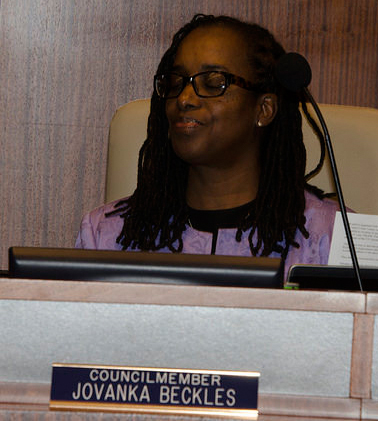
Richmond Progressive Alliance City Council Member, Jovanka Bickles.

Richmond Progressive Alliance City Council Member, Jovanka Bickles.

Engaged and locally grounded reporting and communication is a central reason for the existence of KPFA. For instance, Richmond and San Pablo are quietly becoming “the new Mission” and it begs for involvement and connection with the Bay Area’s main community radio station.


3.  What key experience, connections, skills or traits would you bring to the Local Station Board to advance the station’s mission?


I have extensive experience in community media and leftist organizing, both broadcast radio and more recently internet sites. In my four decades since finishing high school in Millbrae, I have had the honor to become actively involved in community radio stations, starting and hosting shows as a volunteer in every city I’ve lived in, including Managua, Nicaragua and Mérida, Venezuela. I have also been a paid staff member charged with helping facilitate a large volunteer base to run a successful bookstore and community center (New World Resource Center in Chicago) and now a professional paid staff at The Real News.


4.  What ideas do you have for helping the station and the Pacifica Foundation meet the financial challenges currently being faced?

by Alan Cleaver

by Alan Cleaver


In the last two decades I have increasingly studied the political economy to better understand the workings of power, and with a deliberate aim to use this knowledge of finances to help and to fund non-profits. Addressing the financial problems at KPFA and Pacifica, beginning with improving transparency and efficiency, are a top priority for me.I have attended several Local Board meetings but, until I am able to grapple more with the opaque bookkeeping of KPFA and Pacifica, I cannot offer a succinct program to solve these problems.

I strongly support maintaining all of Pacifica – in fact, I would like to see it expand to more cities!  There are troubles throughout Pacifica, but the worst are clearly in New York.  I’m not sure just how much we can help out from the West Coast, but I will do all I can do to try and right this ship: Pacifica is a very important resource and we cannot let it be diminished.
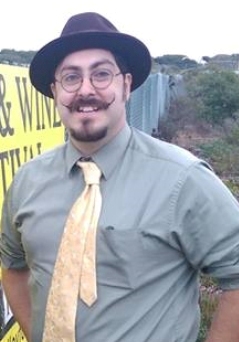
 

G. Mario Fernandez

Please follow and like us:
G. Mario Fernandez

G. Mario Fernandez


Recent SF State political psychology graduate, former Napa Community College Student Body President, former Occupy Oakland volunteer

Salutations!

I’m Mario Fernandez, a Bay Area Native and a KPFA community listener for over 20 years. I am excited for the opportunity to be part of the Local Station Board. Programs like Hard Knock Radio and La Onda Bajita are part of this amazing institution that represents a community/culture that sits aside from mainstream media.

KPFA isn’t alternative news or music; it is community generated content. The KPFA motto is exactly the view from which I will govern: Listener Supported, Community Powered.

As a representative of the KPFA community, I will work to provide transparency for the process and sustainability of the station budget. Resource improvement for staff—paid & unpaid—is necessary to the improvement of the station in terms of technology and interpersonal relationships. For the community, the re-establishment of the program council would engender a stronger connection with the station and generate more grassroots content.

The time I have spent as a student-representative on numerous committees involved in various projects (e.g. Get Out the Vote drives, legislative visits, funding for higher education demonstrations, etc.) shows that I know the importance of strategic planning and the necessity of a proper budget.

YOUR support and power are the motivational forces of KPFA. My community empowerment comes from my involvement in local politics from Occupy Oakland to Black Lives Matter and recently the Save E. 12th St. Parcel and highlights my activism. The community support I elicit is part of what I am when I volunteer at Park Community Garden or assist with our neighborhood clean-up out near West Oakland. This is what you give KPFA and this is what you’ll get from me as your local station board representative: support and power.

Thank you to the United for Community Radio (UCR) group for their endorsement of my candidacy. Both mine and their views overlap for a more sustainable, responsible, and community connected station.

My endorsers include: Bruce Dixon, Black Agenda Report; former local station board members Chandra Hauptman, Cynthia Johnson, and Joe Wanzala; and, Marylin Langlois, Richmond Planning Commissioner.

Please feel free to contact me through the UCR (www.RadioUCR.com) website or my Facebook: www.facebook.com/awesomemario

In Solidarity,

G Mario Fernandez

Official Q. & A.

1.  In what ways are the station moving in a positive direction, that you would want to continue or perhaps improve?

KPFA provides amazing music and great a great perspective of national and international news not typical of mainstream media.  The station’s ability to now live stream is a great use of technology and shows its ability to evolve in the dynamic landscape of media.


2.  In what ways are the station moving in a negative direction, that you would want to stop or change? What changes would you work for?

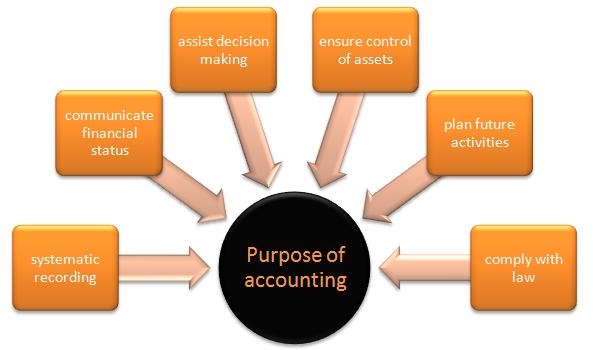
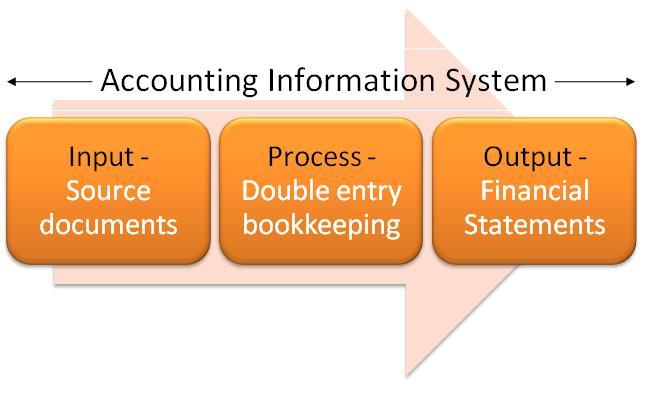
Accounting process 1This station needs more emphasis on its respective communities and to engender more involvement with local interviews with locals and local events. KPFA also ought to have a more transparent and sustainable budget given that the station is wholly listener supported.


3.  What key experience, connections, skills or traits would you bring to the Local Station Board to advance the station’s mission?

I bring my passion and fervor for social justice and my community, my understanding of specific accounting practices, and my organizing/organizational skills. I have worked on political campaigns and have been a student-representative and leader at the local and state levels, so I am familiar with this type of representational setting. I recently graduated with my degree in Political Psychology from San Francisco State University, and I have been in involved in the Black Lives Matter movement and with Occupy Oakland. This is the type of work for which I am passionate.


4.  What ideas do you have for helping the station and the Pacifica Foundation meet the financial challenges currently being faced?

Of course, a sustainable and transparent budget would make it easier assess the fiscal future of KPFA, but there is at least one significant solution to this issue: fix the financial errors that cost KPFA the CPB grant. Constant on-air fundraising and the grant aside, the only other way to get the needed money to operate is to move beyond the airwaves and solicit our residents and listeners on the internet and in-person at local events.


Don Macleay

Please follow and like us:

DonMacleayMarch2015
 
Five
years working for the Sandinistas, 19-year school volunteer, Green Party activist, former union organizer and shop steward in Oakland 

Don Macleay for station board 2015. The community needs our community radio station to thrive and do quality journalism.

With newspapers going out of print, investigative journalism running out of funds and big business buying up what media remains, our local, community owned and operated radio stations have become more needed than ever. We need them because they are one of the few sources of news left that is independent from the commercial interests; and we need them more than ever because journalism itself is becoming scarce, weak and compromised.
There used to be some bright lights from privately owned media and our so-called “public” media but they are becoming fewer and dimmer.

A station like KPFA is one of the rare gems we have left and we need to take good care of it.  Getting more people to listen, join, and become dues paying members and getting more members of our communities to volunteer and be part of making our own media, will make our station stronger and keep us on the path of handing this resource off in good condition to the next generations, just as it was handed off to us.

KPFA does a good job in many things, and could be doing a better job in almost all of them.  Using the people and resources we already have, we should be the number one stop on the dial for local news in the Bay Area. We can deliver independent, smart journalism the public can trust.

from 'SpeedofCreativity.org"

from ‘SpeedofCreativity.org”

What I would like to see is better coordination, more responsiveness and more relevance in our on-air presence. We need to support all of our people and build up our sense of community and teamwork.

As a board member, I will have two key priorities:
1 Bring in more listeners.
2 Improve the quality of what is on the air.

And I will work cooperatively, respectfully and appreciatively with all other members of the board, from whatever faction to move forward on these two goals. I will also work to foster high moral and a sense of cooperative support among the community of employees, volunteers and active community members who help make this station run.

I am very informed about the issues of the day around our schools, our local politics and issues around incarceration, restorative justice and police accountability. I also have strong technical and foreign languages skills to put to the service of our station.

I am grateful for endorsements from Laura Wells, Janet Arnold, Greg Jan, Akio Tanaka, and Marilyn Langlois and I am proud to be working with United for Community Radio.


Official Q & A

1.  In what ways are the station moving in a positive direction, that you would want to continue or perhaps improve?

Our programming has quality, breadth, depth, and diversity as a whole. We can bring a lot of intelligent, independent voices to almost any subject, giving the community better quality current news and much better background and in-depth analysis than most anyone else on the air.I would like to see it all work more like a team making better use of our plethora of informed, experienced people. I’d like to see a more coordinated, proactive and quick response approach.

Martin Luther King Jr. March in Oakland, California.  Photo by Daniel Arauz

Martin Luther King Jr. March in Oakland, California. Photo by Daniel Arauz

When events take place in our community, KPFA has what it needs to become the number one place people in the Bay Area should look for news.

As important events come out in the news, KPFA also has what it needs to become the number one place where we tune in to make sense of it all. We got a lot, we should leverage it more.


2.  In what ways are the station moving in a negative direction, that you would want to stop or change? What changes would you work for?

The noise of our factional infighting at KPFA has become the noise of the neighborhood couple who are always shouting at each other. The neighbors do not ask what they are shouting about. They ask why there is so much drama and excessiveness. It is giving the whole Pacifica movement a bad reputation.The nasty tone of our infighting is all over social media and our election debate broadcasts.
On the air, our shows are obviously very disjointed. Often they duplicate each other on background discussions and they do not seem to be part of some overall programming plan. The quality of our on the air sound, and tone needs more attention than it gets.The sound and tone of our on-air pledge drives has become very off putting. This badgering hurts our public image, as does the number and length of those drives. Community members tune away, and established KPFA members also tune away.I think we need more attention to the craft of radio using all our skilled people to give us better overall programming quality, coordination and to make our fundraising a festive period instead of a dreaded burden that turns listeners off.

3.  What key experience, connections, skills or traits would you bring to the Local Station Board to advance the station’s mission?

My contribution to KPFA focuses on the commitment to PUBLIC INFORMATION.
I bring technical skills to the team that will make me an informed board member.
My tech skills are in electronics, mechanics and more recently computer networking.
As a person who speaks six languages, I can offer some help understanding different communities and international affairs and knowledge of international media.

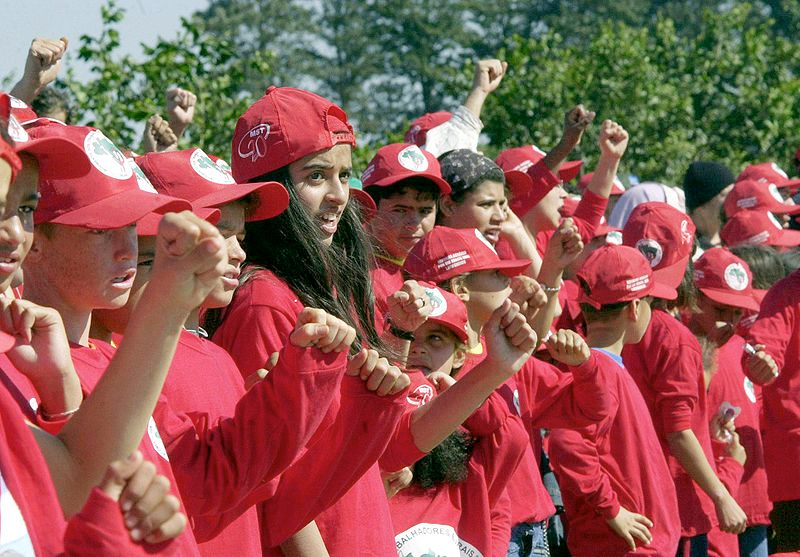
Children singing the Internationale, at the 20th Anniversary of Brazil's Landless Workers Movement

Children singing the Internationale, at the 20th Anniversary of Brazil’s Landless Workers Movement

I have a deep connection with Latin America and am happy to help us expand our coverage in Spanish and our outreach in the Spanish speaking listening area.  My participation on the board will also be informed by past experience working in the nonprofit sector as a project director and a board member of other organizations.  I currently sit on a business district board and am very used to working with people who hold different views, which will be needed to face KPFA’s challenges.

4.  What ideas do you have for helping the station and the Pacifica Foundation meet the financial challenges currently being faced?


I think the station should live within its means and have a cautious budget.
The most important task we have in front of us is to expand the audience and from there expand the number of listeners who join up as dues-paying, voting members. This is the base that we should grow.I think every show should be involved in helping build up the listenership for their show, and for the station as a whole. I think we should consider shows and formats that bring in younger listeners.We should also reduce costs by being more of a part of the local community media efforts. There are nonprofits and schools that we could collaborate with to mutual benefit.At times we need to hold off on new shows until we have the money and volunteer time needed. That includes a local news segment, which I support.If a show has individual grants, we need to make sure that there is a firewall protecting the rest of station operations in case that grant gets discontinued.


Marilla Argüelles

Please follow and like us:
Marilla Argüelles

Marilla Argüelles

Former President of home care workers’ chapter, SEIU, Local 616, editor of “Extracts from Pelican Bay,” former KPFA Labor Collective member.

I, Marilla Argüelles, have developed, provided, and advocated 30 years for services to those facing trauma, deprivation, and stigma. I welcome the idea of serving KPFA because it’s given me my best teachers and allies. Everyday its programming helps me as an artist and teacher to battle bureaucratic obtuseness and lack of funds with creativity and Socratic obstinacy.

•  I am well aware of the frustration, waste and expense that accompany litigious solutions. In 1983 Barbara Lubin and I co-founded Project PLAE, Play and Learning in Adapted Environment, the East Bay’s first physically integrated, children’s recreation program.  It became a model for programs ranging from Palestine to Siberia.  During the three years that Berkeley Unified School District sued our family for insisting on a language-based, local education for our son, every Berkeley Special Education student under 12 was referred to its summer sessions. (Our son became the first wheelchair user to attend Berkeley High School.)

Photo by Kiren Koehl, from Tages Zietung

Photo by Kiren Koehl, from Tages Zietung

• In 1984 I founded Consensus, California’s first nonprofit head injury program to receive Adult Ed funding.  As Community Colleges became more inclusive, our focus morphed into media education projects at underachieving high schools.  These differed radically from other digital storytelling programs because it taught students to look for the root causes of social problems, rather than to focus on personal histories of injustice as isolated instances of cruel fate or bad luck.

Students-created Powerpoint presentations on child slavery (BitterSweets: The Dark Side of the Chocolate Trade), criminal injustice, agribusiness, and With or Against Us: The U.S. Patriot Act). They presented these for community service credits to Union meetings, church groups, adult education classes and public library community forums.

• In 1993 a Flashpoints’ interview led me to the California Prison Focus, where Bato Talamantez graciously allowed me to edit letters from the SHU at Pelican Bay into an unauthorized (underground) anthology lauded by Adrienne Rich, Carlos Muñoz, June Jordan, and the BBC.

Since then I’ve spent equal time and heartache serving on Union Contract Negotiations and Executive Boards. As a current member of ULTCW, United For Long Term Care Workers and former president of SEIU 616’s chapter for In-Home Support Service providers, I’m keenly aware of the need for fiscal vigilance, transparency, and resilience. And for the need of unions to work cooperatively with local grassroots efforts on campaigns such as the Fight For $15, MediCare For All, and CoalFreeOakland. KPFA and other Pacifica stations have long supported teachers’ unions, it’s time to empower PTA parents at the local level by hosting events focused on examining the impact of deregulation and international corporate interests on local budgets and cuts.

I pledge to work to replace corporate obsessions of profit, growth, and technology with local democratic economies geared towards Justice and Survival. I’m endorsed by the UnitedforCommunityRadio slate and by Barbara Lubin, Michael Parenti, and Judith Ehrlich.


Official Q. & A.

1.  In what ways are the station moving in a positive direction, that you would want to continue or perhaps improve?
KPFA (particularly Dennis Bernstein) does an excellent job fulfilling Sections (d) of the Mission Statement: “obtain[ing] access to sources of news not commonly brought together in the same medium,” by Guns & Butterexposing the craven manipulation of news by main stream media. I’ve learned far more from Letters and Politics, Project Censored, Guns and Butter, Uprising, HardKnockRadio, and Against The Grain about history, politics, and economics than I did at The University of Chicago despite majoring in history.  They’re certainly better at explaining “the causes of religious, philosophical and racial antagonisms” (growing up in Tennessee, always considered immutable and inevitable).  I’m indebted to KPFA for Joy De Gruy-Leary, Tim Wise, and others analysts of white privilege, and pleased that a more racially, age-diverse audience now attends the speaker series. Pacifica Archives’/KPFA’s Adopt a School Library day is a brilliant collaboration.


2.  In what ways are the station moving in a negative direction, that you would want to stop or change? What changes would you work for?

Except for speaker series, KPFA apparently lacks a coordinated plan to involve Berkeley’s 30,000+ college students – most have never heard of KPFA.  Several UC professors have created “Course Threads” and “Big Ideas Courses” that synthesize knowledge from different disciplines to promote nuanced understanding of an important topic.  Could apprentice staff broadcast these regularly?  We need to support Social Action Committees of local Faith Based Congregations.  They’d probably welcome guest speakers with information about the Archives, especially if Archives were cataloged by topic. (Robert Reich recently joined with MoveOn to promote 300+ small house party Teach-Ins featuring 12 different 3-minute videos on ways to Save the Economy. Many filled within days.)
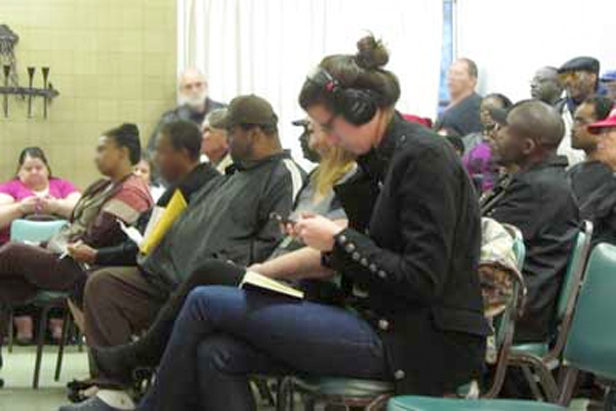
Richmond public housing residents at a crowded discussion called by Richmond Alliance's then Mayor Gayle McLaughlin.

Richmond public housing residents at a crowded discussion called by Richmond Alliance’s then Mayor Gayle McLaughlin.

We need a daily half hour early morning labor show with Andres Soto and/or Steve Zeltzer covering issues and actions like The Richmond Alliance. Volunteers could staff KPFA information booths at Farmers’ Markets.


3.  What key experience, connections, skills or traits would you bring to the Local Station Board to advance the station’s mission?


Our son’s stays in ICUs staffed by physicians and technicians dangerously ignorant about nutrition, health alternatives, and environmental dangers force us to tread carefully when challenging privilege and authority.  It’s vital to distinguish between genuinely held beliefs, arbitrary decisions, and assumptions.  Layna Berman taught us to challenge “impossible” odds, health systems, and environmental dangers (saving our son’s life twice without meeting him).
Serving as unpaid founder/director of a nonprofit for brain injured, learning disabled individuals honed my skills for grant writing, collaborating, and creating programs that stress inclusion. Providing homecare for 37 years has taught me how low wage workers must organize.   Steve Zeltzer and the Labor Collective generously coached me in producing shows on pesticides and farm workers, Sami Al-Arian, unorganized labor and unions, so I know something about production and editing.  I listen carefully, have a rather photographic memory, and can be a stickler for detail (mixed blessing/curse).


4. What ideas do you have for helping the station and the Pacifica Foundation meet the financial challenges currently being faced?


Pacifica’s Mission Statement Section (c) urges us “to establish awards and scholarships for creative writing, and to promote and aid other creative activities that serve the cultural welfare of the community.” My husband is a widely published poet. I’m an artist and writer. We’ve never heard this goal mentioned on air. Many of KPFA’s more affluent members/listeners would support such efforts, particularly if encouraged to fund them at their former schools, clubs, and houses of worship, and acknowledged as co-sponsors. (more fun and influential than your name on a plaque.) Pacifica’s Archives could be the source of reference materials for topics of competitions.
Winners of awards and scholarships could be invited to submit and/or perform productions at workshops (“Mini-Oscar” events), producing further revenue from the general public. If KPFA (especially HardKnockRadio) publicized BUSKERS ON BART (transient performers from youth programs) it could win hearts, minds, and donations.


Sharon Adams

Please follow and like us:
Sharon Adams

Sharon Adams


Attorney; immediate past vice-president of the National Lawyers Guild, San Francisco Bay Area Chapter; instrumental in protecting undocumented persons from Berkeley civil ICR detentions.

My name is Sharon Adams. I became involved in KPFA when the Morning Mix was abruptly taken off the air, without warning during a pledge drive, and without waiting to see the financial results of the pledge drive. The Morning Mix was produced locally with a variety of hosts addressing issues of regional and national concern.

The controlling majority on the KPFA Local Station Board (LSB) supported replacing the Morning Mix with a pre-recorded production from LA, arguing the recorded production would generate more revenue. Subsequent pledge drive results have shown the LA-produced show did not increase revenue to KPFA. The station remains in difficult financial straits. But, cancelling the Morning Mix did effectively remove local voices from one of the prime drive-time listening hours.

This caused me to look more deeply into the internal issues at KPFA. I learned that KPFA and its parent, Pacifica Foundation, have amazingly bad basic accounting methods that appear to be standard operating procedure. A required audit from 2013 was only recently finalized, while the 2014 audit remains unfinished.

Things must change if KPFA is to remain a beacon of hope, and a place for alternative voices to be heard.

I was on the Board of Directors for the National Lawyers Guild-San Francisco Bay Area Chapter (NLG), from 2007 until 2014, serving as Vice-President in 2014. During that time, the economy suffered a major recession due to global capitalist economic policies. The NLG is a non-profit, membership organization, similar to Pacifica/KPFA. While on the NLG Board, we kept the NLG financially solvent through difficult times by responding appropriately and in a timely manner to the financial challenges. I will bring this type of oversight to the KPFA LSB.

Arguments have been made that KPFA must become more like NPR to remain viable, and that KPFA should receive corporate underwriting.  I do not accept this model. Lewis Hill, founder of Pacifica, understood the value of the unfiltered voices of the people.  Overcoming the doubters, Hill placed his faith in the power of the people, and created Pacifica. I intend to do all I can to uphold this vision.

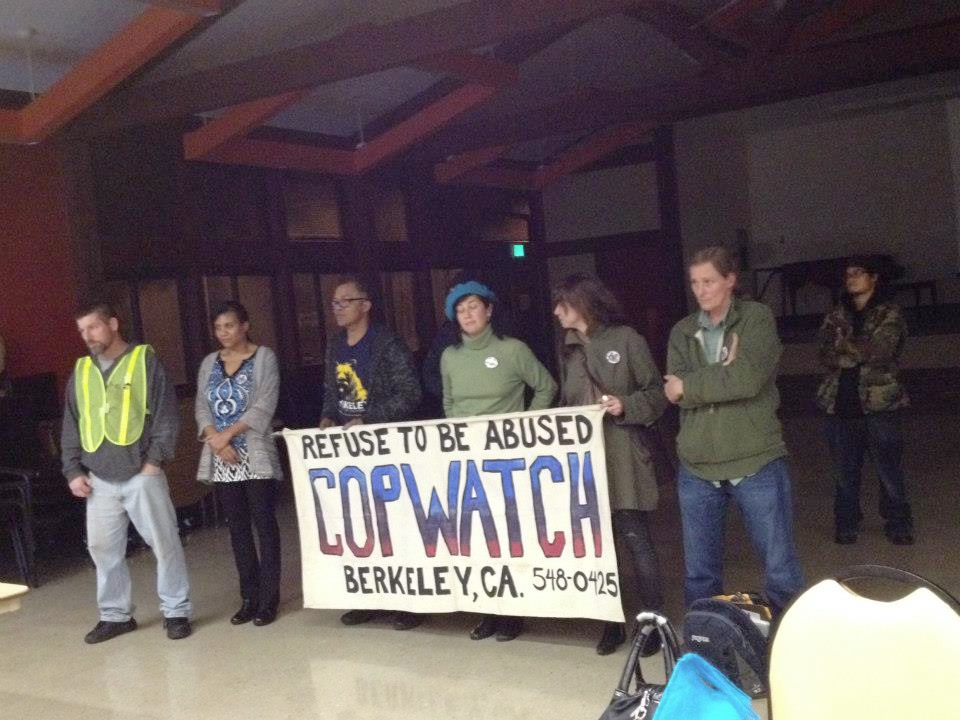
After the death of Kayla Moore, Berkeley Cop Watch stands watch at a police forum.

After the death of Kayla Moore,
Berkeley Cop Watch stands watch at a police forum.

I’m a founding member of the Coalition for a Safe Berkeley. We worked with Berkeley City Council to pass first-in-the-nation legislation protecting undocumented persons from civil ICE detention in Berkeley jails.  KPFA covered this story.  As a founding member of the NLG-Committee Against Torture, we worked against the US torture program, including its links to UC Berkeley Law School. KPFA covered this issue when others, including NPR, ignored it. In fact, NPR refused to use the word “torture” for years.

KPFA must continue, but not as a clone of NPR.  KPFA can be preserved with policies and programming decisions that promote a diversity of the voices addressing a variety of issues; by having paid staff support the diversity of voices; by increasing membership; and by promoting KPFA at events throughout the Bay Area.

Please vote for me and the entire United for Community Radio slate!


Official Q. & A.


1.  In what ways are the station moving in a positive direction, that you would want to continue or perhaps improve?
The new www.kpfa.org website is a wonderful step forward, providing a more interactive and accessible format.  And, the KPFA legacy continues; there are still great programs on the air, and there are still great people dedicated to making KPFA the best it can be.  I will continue this tradition and continue to ensure that programming decisions represent the voices of all parts of the community.  KPFA has in the past, and still does, report on issues that are not reported elsewhere.  As a listener, I have learned so much about the world from hearing the different perspectives on KPFA.  As an activist, I appreciate the importance of KPFA’s willingness to report on stories not routinely covered by mainstream media. 

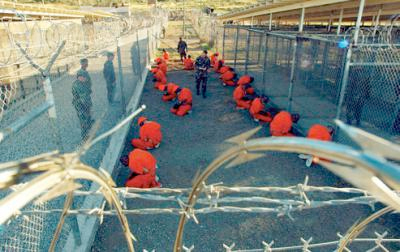
The U.S. prison in Guantanamo Bay. Current and former detainees have reported abuse and torture in this prison.

The U.S. prison in Guantanamo Bay. Current and former detainees have reported abuse and torture in this prison.

I’m a founding member of the National Lawyers Guild’s Committee Against Torture, and we have worked against the US torture policy. KPFA covered this issue when others, including NPR, ignored it.  In fact, NPR refused to use the word “torture” for years.


2.  In what ways are the station moving in a negative direction, that you would want to stop or change? What changes would you work for?

The station has much room for improvement, including having a better grasp on the true financial status of KPFA and the Pacifica Foundation.  I will work to get accurate and detailed accounting of the pledge drive revenues, and will carefully review all financial information.  Removal of the Morning Mix from the 8 am drive-time hour was a big move in the negative direction, in my opinion.  The Morning Mix featured a diversity of hosts discussing a wide variety of issues, and was replaced with a show recorded and produced in LA.  I will work to bring more community input into the programing decisions.  In addition, as an attorney and activist, I recognize and appreciate how important it is for KPFA reporters to respond to events happening locally, and to have reporters, whether paid or unpaid, willing to report on local events. I will work to improve the apprenticeship program, which encourages more people to become reporters.
3.  What key experience, connections, skills or traits would you bring to the Local Station Board to advance the station’s mission?
I was on the Board of Directors for the National Lawyers Guild – San Francisco Bay Area Chapter from 2007 until 2014, serving as Vice-President in 2014.  During that time, the economy suffered a major recession due to global capitalist economic policies.  The NLG is a non-profit, membership organization, like KPFA.  While on the NLG Board, we kept the NLG financially solvent through difficult times by responding appropriately and in a timely manner to the financial challenges.  I will bring this type of oversight to the KPFA LSB.  In addition, I have worked as general counsel for several corporations, and understand corporate law and how it applies to entities like the Pacifica Foundation and KPFA.  There are many complex issues facing both entities, and I will bring my legal knowledge and expertise to the KPFA Local Station Board. Bookkeeping 2
 

4.  What ideas do you have for helping the station and the Pacifica Foundation meet the financial challenges currently being faced?

Accurate and up-to-date accounting and business records are a crucial step toward improving the financial situation at Pacifica Foundation and at KPFA.  It is impossible to analyze the financial situation because the numbers are often inaccurate, causing a lack of clarity about where the money is going.  After obtaining accurate and timely accounting records, it will be possible to determine an accurate estimated annual income for KPFA.  Once there is an accurate estimated annual income, it will be possible to rationally discuss how to keep within the annual budget.
I have done this while on the Board of the National Lawyers Guild, and will do this again if needed at KPFA.  In addition, to generate more revenue, KPFA could begin holding events in places other than Berkeley, (like the South Bay, like Richmond, etc.) to increase the KPFA name recognition and generate revenue from the events.

Jeremy Miller

Please follow and like us:
Jeremy Miller

Jeremy Miller

Idriss Stelley Foundation program director, San Francisco No-Taser Task Force member, host of Heterotopia on Mutiny Radio, independent journalist with S.F. Bay View newspaper.


My name is Jeremy Miller and I am running for KPFA’s Local Station Board as a listener candidate. Radio is the reason I am campaigning. Steve Martin once said, “Being a comedian is like being a rock star… only without the sex or the money.” Radio shares an analogous place. Generally inside a studio (I have been an independent San Francisco broadcaster for the better part of a decade) there are one or two people, with collective shows rarely having more than 3 or 4 hosts. Guests notwithstanding, it is a lonely place, populated by lonely people who speak to and with the world. Ironically however, this lonely endeavor is still the most popular medium of expression in the country and KPFA is (outside of corporate control) its flagship. I believe that community radio speaks to collective forms of loneliness i.e. feeling politically alienated, economically marginalized, racially or sexually disregarded, suffering from immune-rejection of Top 40 Corporate drivel etc., and that the honesty of this humility can reinforce and regenerate existing worlds as well as inspire new ones.


Then there’s the business. Sad to say KPFA has declining listenership. I believe that there are two main causes of this decline. First, despite quite an array of programming, there is room for more diversity and this impulse is sometimes quashed in favor of entrenchment of the Same. In short KPFA must remain vital. As an LSB member I would push for the “de-centralizing” of programming decisions. Second, remembering that KPFA is listener funded, there has been an increase in fundraising pitches in recent years with a corresponding decline in money. I believe that the budgetary situation at the station needs critical attention, while also respecting the listeners by not badgering them for money too extensively.


We need to be more creative with the resources we have thanks to all of the listener supporters and let our creation inspire new members to join as opposed to the creation of short-sighted new pitch structures to squeeze a few more drops out of the existing pool. Finally, KPFA has a paid staff, and a volunteer (unpaid staff) army, who through hard work, deliver the amazing radio that we love. As an LSB member I would put my shoulder towards increasing solidarity amongst the Pacifica affiliates, supporting stronger collective bargaining agreements, and working towards greater representation and compensation for KPFA’s unpaid staff.


Photo by Daniel Arauz

Photo by Daniel Arauz

Oh Yes — me. I’m an independent journalist and radio producer. I’ve hosted “Heterotopia” on Mutiny Radio (formerly on Pirate Cat Radio) for eight years. I write for the SF BAYVIEW NEWSPAPER and POOR NEWS NETWORK. I am also Program Director of the IDRISS STELLEY FOUNDATION, which provides direct services for victims, and families of victims, of Police/State Violence.


I am running on the United for Community Radio slate and my candidacy’s been endorsed by Bruce Dixon (Black Agenda Report), Michael Parenti (author), Laura Wells (Green Party), and Willie and Mary Ratcliffe (S.F. Bayview/Former LSB). Please vote for me and the entire United for Community Radio team!

—————————————————

OFFICIAL Q & A

Jeremy Miller

Jeremy Miller

1.  In what ways are the station moving in a positive direction, that you would want to continue or perhaps improve?


KPFA is moving in a positive direction with more diverse cultural voices being given airtime. Africa Today, Voices of the Middle East and North Africa, Bay Native Circle, Hard Knock Radio, and APEX Express are some of my favorite programs on the station. In my vision of a community radio station, as many voices as possible will be heard.  There should not be a monopoly on communication in any form (even if it is a tried and true “progressive” formula).  No representation will ever supplant the truth in a human voice.  Therefore I believe strongly in a plurality of voices, radio self-determination, and would encourage the expansion of this to include more historically marginalized voices, and more multilingual programming.


2.  In what ways are the station moving in a negative direction, that you would want to stop or change? What changes would you work for?


Jeremy Miller

Jeremy Miller

KPFA has in recent years become fiscally unsound. This is very disturbing for a station that loudly proclaims it is listener sponsored. I would work towards fiscal accountability and more creative use of limited resources. There have been several acrimonious controversies over the last few years that have both taxed the public trust for the station as well as belied some latent structurally embedded prejudices. Specifically, I am referring to the cancellation of the Morning Mix, the questionable termination of certain employees and questionable hiring/promotion of others, the dismissal of historically held minimal rights/privileges of KPFA’s unpaid staff and speaking of unpaid staff, perhaps most importantly, the brutal beating of Nadra Foster and the station’s inglorious response. My background is in social justice work. I carry that wherever I go and will fight like a dog for KPFA to live up to its own proclaimed commitments.

3. What key experience, connections, skills or traits would you bring to the Local Station Board to advance the station’s mission?


What am I bringing to the table? I have twenty years of experience in the music industry as a performer, retailer, consumer, listener, and writer. I have been a radio DJ/producer for Pirate Cat and then Mutiny Radio for close to a decade. I am a seasoned community organizer, currently Program Director for the Idriss Stelley Foundation (an organization that provides direct services for victims and families of victims of Police and State violence). I am a broadcast and print media journalist. I have previously been in many board meetings of various natures, and have served as a founding director on the board of the now defunct organization “Education not Incarceration.” In short I am equally comfortable behind the soundboard, at the board meeting, and in the street. I am also a lifelong Bay Area resident and longtime supporter of KPFA.
4. What ideas do you have for helping the station and the Pacifica Foundation meet the financial challenges currently being faced?


KPFA’s current financial challenges preclude the possibility of a short answer. Expenses need to be audited.  Listenership and membership need to increase WITHOUT abusing the current listenership with more frequent pitches.  I support the strengthening of collective bargaining agreements and greater solidarity among Pacifica affiliates.  Accountability is a must.  I believe that it is possible for KPFA to be fiscally sound without draconian cuts, but it is going to take some creativity, fresh thinking, and a lot of work.  What I will bring to this matter is a level head, a creative disposition, and ample experience in grassroots fundraising, as well as in generating listenership with absolutely no budget.