UCR Candidates Support KPFA’s Live Streaming Team & the Global Media Revolution

by Carol Wolfley

Live streaming with interactive media connections has been identified by members of United for Community Radio (UCR) as a key platform issue in the upcoming KPFA Local Station Board election.   People involved in United for Community Radio have initiated and participated in the KPFA Live Streaming team.   And, United for Community Radio supports greater community participation and increased visibility of real-time events live steamed to the kpfa.org website.

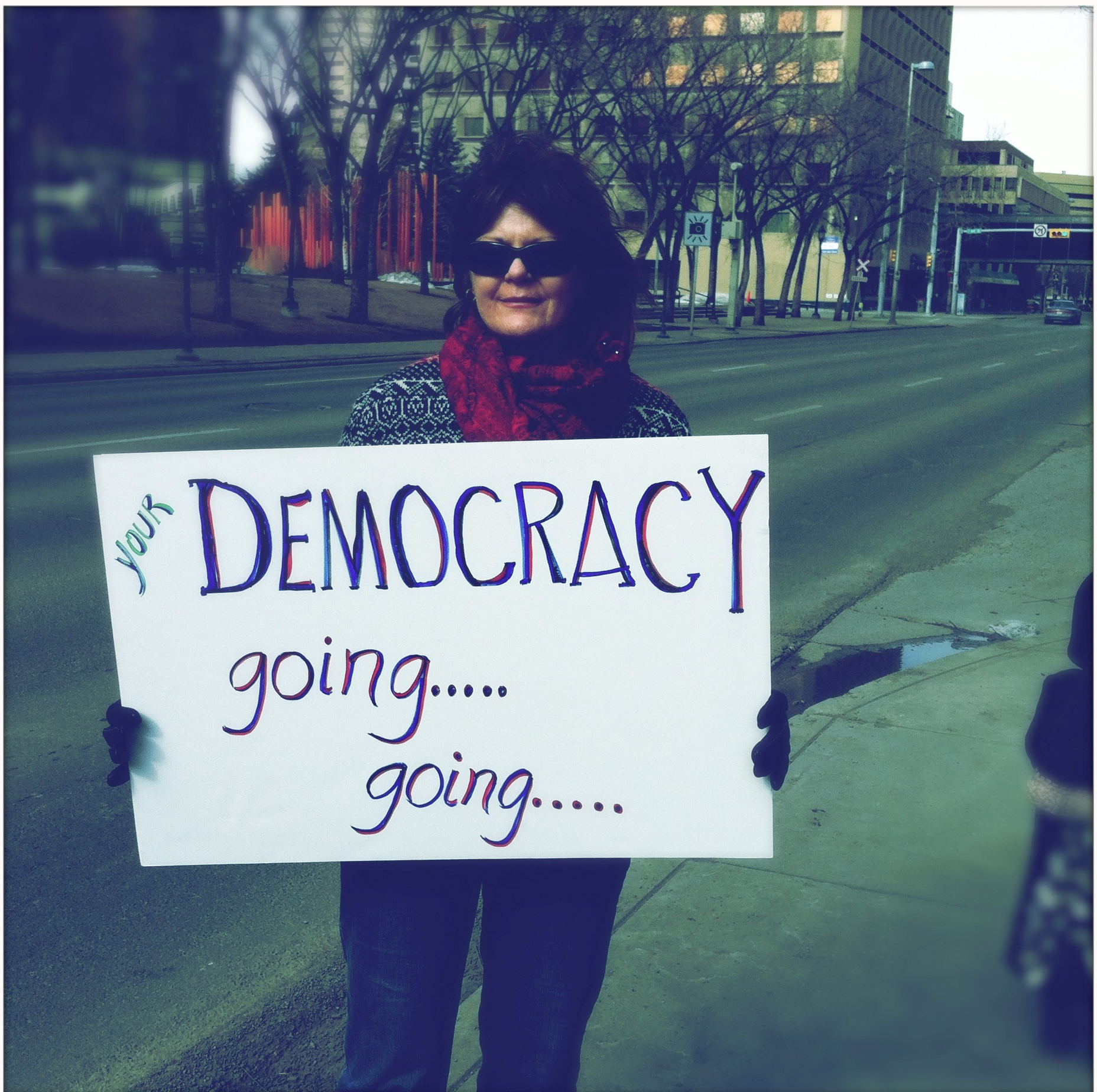
Live steaming Sign by Ron Mader #buzzwordbingoJanet Kobren is working to establish procedures for all Pacifica stations and affiliates to coordinate and consolidate live streaming on a national level.  She is a United for Community Radio Local Station Board incumbent candidate, a Pacifica National Board member and the Foundation Secretary and a live streamer herself.

Janet and Local Station Board member Frank Sterling have persevered in support of live streaming at KPFA Local Station Board meetings.  Frank is also a UCR representative.   Both have faced strong opposition from Save KPFA-aligned program director Laura Prives.

The KPFA Live Stream Team is a group of live streamers, media specialists, street journalists and activists committed to providing up-to-the-minute news, public affairs and cultural events coverage through KPFA.org and KPFA-stream.   They are volunteers who provide audio-video access in real time for smart phones, pads and computers.  They want to provide regular live streamed material broadcast from KPFA’s website and/or archived as video on kpfa.org.   These live on-the-spot broadcasts help those who want to follow what’s happening and what people are doing in the streets about all kinds of issues.

Archive of KPFA’s live-stream from the February 7, 2015 Oakland Rally for Real Climate Leadership, the largest anti-fracking rally in U.S. history.

The team defines themselves as part of community (local and global) actions, working in solidarity with others around the U.S. and the world.

Locally, the team streamed the 2014 Block the Boat and other Port of Oakland pickets to support ILWU Local 10 longshore workers to refuse to work Israeli ZIM line ships, and on May Day of 2015, covered the Port of Oakland shut down for Black Lives Matter.  The team was at the Real Climate Leadership March, the “Shell No[3] ” blockage of the Port of Seattle and the May 24th Break the Curfew event at Oscar Grant Plaza.

The team is reaching out geographically and into diverse communities to help people participate in events through live streaming and social media. To get an idea of what larger scale live streaming resources look like, go to Global Revolution.

United for Community Radio and the KPFA Live Stream Team would like to see one-click live stream access on kpfa.org and to expand with much more real-time news on KPFAstream.

Please support this effort by voting for Janet Kobren, Scott Olsen, Sharon Adams and all of our UCR candidates in the upcoming KPFA Local Station Board Election.

—————–
Carol Wolfley is a retired Berkeley U.S.D.  teacher, does mediation and is a member of the KPFA Community Advisory Board and Outreach Committee.
Live Steaming graphic by Ron Mader

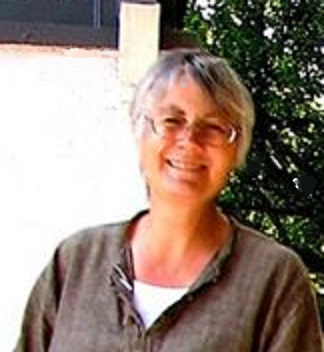
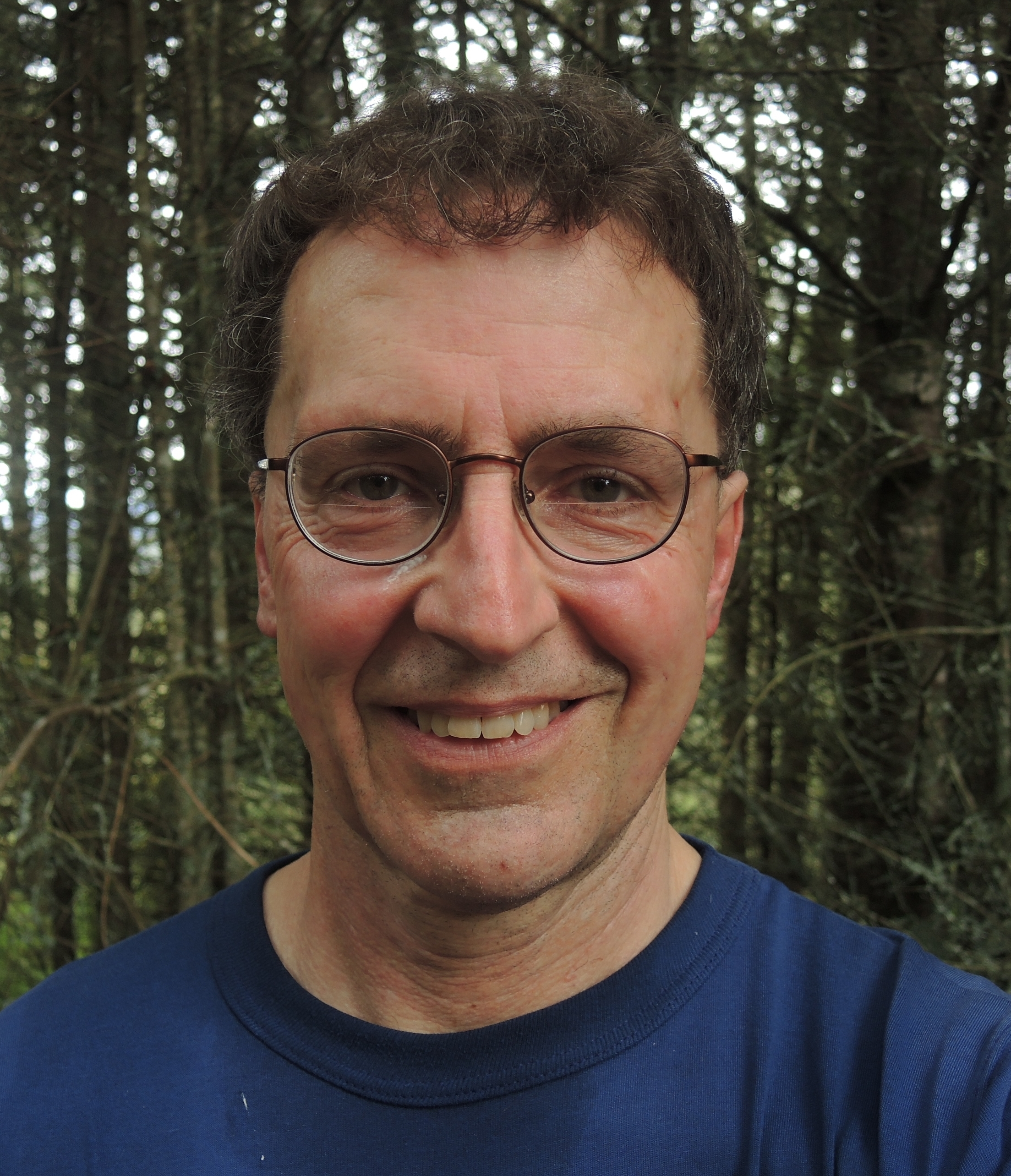
Virginia Browning

Virginia Browning

Virginia Browning


Current LSB member, health care researcher, down winder, and longtime KPFA activist. 


Virginia Browning here, incumbent Local Station Board member, radio lover, former programmer, activist. KPFA Election Committee 3-plus years; current member Pacifica National Programming and Governance committees.

I’ve come to understand the complexity of turning the relatively gargantuan Pacifica ship. Pacifica, license-holder to KPFA and four other stations, is a single legal entity. Successes and failures of each station affect all others: most of Pacifica’s Texas audience had no signal for over a year; Pacifica’s auditor, owed $55,000, couldn’t begin a year-behind audit required for funding millions of dollars; KPFA spends thousands on new carpets.

KPFA Finances in $ millions
2011 Revenue: $3.276; Expenses $3.522
2012 Revenue: $3.441; Expenses $3.475
2013 Revenue: $2.948; Expenses $3.295
2014 Revenue: $3.035; Expenses $3.526

I joined Maria Gilardin, then staff member Robbie Osman and others in alerting listeners about an unaccountable national board BEFORE 1999.

Over 10,000 of us took back KPFA and Pacifica. New bylaws, crafted network-wide by listeners and staff, were adopted.
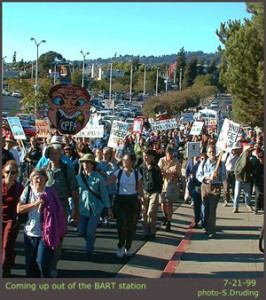
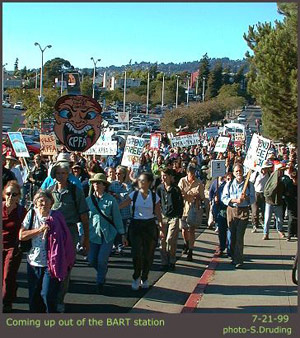
In 1999, thousands of KPFA listeners mobilized to save the station. Virginia Browning raised these issues when many were still unaware. Photo by S. Druding.

In 1999, thousands of KPFA listeners mobilized to save the station. Virginia Browning raised these issues when many were still unaware.
Photo by S. Druding.


But the enormous conflict-of-interest of paid on-air programmers serving as board members over their “managers,” and other bylaws oversights have left the organization in dire shape financially. Management ambiguity locally and nationally within the current structure has paralyzed accountability.

When listeners gained a voice at KPFA, some who fought the elitists did so for the their own reasons. KPFA includes some whose on-air personae and ease of expression have lulled many to unquestioningly support their power as de facto management.

But question we must! Those with a fervor for a more inclusive network ready to challenge corporate platitudes must retain the limited power the bylaws represent. In light of massive conglomeration of media everywhere, we must vote to keep Pacifica alive and strong.

Please read articles at this website and at Daniel’s Free Speech Zone.  Add perspective (a KPFA tradition) to the slick distributions of “SaveKPFA” or better “Self-Interested-Son-of SaveKPFA” (SISOSK), who cleverly adopted the successful 90s name invented then by members of their current opposition. I urge you NOT to vote for any SISOSK members in this election. (Talented? Not as board members.)

I strongly support United for Community Radio (UCR)’s vision and work.
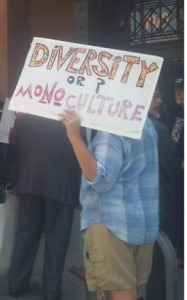
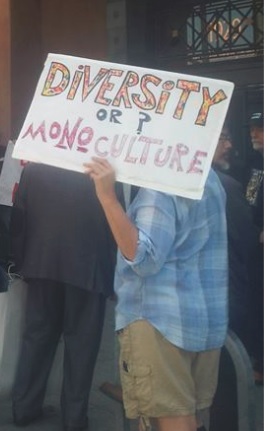
Virginia Browning with sign at rally in support of the "Morning Mix."

Virginia Browning with sign at rally in support of the “Morning Mix.”

Can the current Pacifica structure be tweaked into shape following a fair board election? Some of the hardest workers for fair elections feel that even the fairest, most engaging on-air promotional extravaganzas will still create a national board bogged down by its size and intransigent members. Changes in governance are necessary but not sufficient to save Pacifica.

The current situation is so life-threatening to the whole topple-ready network that some from historically opposed factions nationally and locally, while retaining importantly different visions, have begun a consensus-building process to keep the network from being swallowed by the six who own 90% of U.S. media. New bylaws and new culture are required for Pacifica’s survival.

Contact me at callresponse[dot]radio@yahoo.com

Vote for 9+ UCR Candidates or independents ONLY

Many endorsers including Bruce A. Dixon, Barbara Lubin, Michael Parenti, Joe Wanzala, Ramsés Téon Nichols

 Official Q. & A.

1.  In what ways is the station moving in a positive direction, that you would want to continue or perhaps improve?
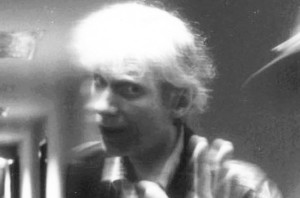
 Don Joyce of Negativland Courtesy of Negativland


Don Joyce of Negativland
Courtesy of Negativland

Expand the spirit of KPFA’s apprenticeship program. Listeners now appreciate the talents of some heavily-promoted programmers. But I think of Don Joyce, KPFA unpaid programmer for 34 years, recently-deceased. Few KPFA listeners knew of Joyce though there is no doubt he was a major world-influence in radio/audio art. KBOO-Portland played a tribute, often simply hypnotic.   Joyce said collaboration produced his best work. I wish for KPFA that many new voices will, with access, patience, and promotion create various wonderful segments. Listening friends, colleagues, and communities strengthen KPFA. Those whose phrasings and connections are now familiar will have on-air time as well imparting knowledge and keeping ears open to new talent.

I support the video team members who have donated their talent, time, and videos. I’ll work to promote more accessible KPFA web links, so this popular technology can grow KPFA.


2.  In what ways is the station moving in a negative direction, that you would want to stop or change? What changes would you work for?

KPFA revenue decreased $406,000 since 2012; expenses increased $51,000.

Board members’ visionless disparaging of website video offerings that would likely bring members and funds causes concern.

KPFA has the opportunity to host a diverse, enlightening, and interesting KPFA board election. Every election, de facto management prevents this, and no internal culture encourages it. Recently Pacifica National Board member Brian Edwards-Tiekert decried the burden of taking 5 minutes from 3 months of shows to inform listeners of this election. Contrast U.S. Elections: considered so fascinating we await weeks of on-air coverage, though the outcome is strictly confined.

United for Community Radio works for a more welcoming, accessible hub for diverse listeners meeting together. Hearing from poorer folks with incisive visions for change is needed. This can be exciting and engaging with access and encouragement. Diverse sources are needed for more cutting-edge, less wire-source news.

3.  What key experience, connections, skills or traits would you bring to the Local Station Board to advance the station’s mission?  

Incumbent, KPFA board; past radio programmer, radio lover, activist. previous: KPFA Election Committee; current: Pacifica National Programming and Governance committees.

Institutional Memory, from Moving at the Speed of Creativity

Institutional Memory, from Moving at the Speed of Creativity

Institutional memory and attention: I worked with many to preserve KPFA in the 90s. New bylaws gave hope to our progressive network.

But complex bylaws intended as safeguards, and the conflict-of-interest of paid broadcasters serving as board members over managers, have left Pacifica in dire shape financially. Management ambiguity within the current structure has paralyzed accountability:

Pacifica Board treasurer Edwards-Tiekert of the “SISOSK” faction (see above), previously falsely accused Pacifica of “raiding KPFA’s bank accounts” (purposely conflating the pre-and-post ’99 boards) in numerous venues, damaging Pacifica’s reputation. With his chosen management in place, he notes 7/9/15 that to not grab funds from any network source is a “failing in its duty of care.”

Pacifica must change to survive.


4.  What ideas do you have for helping the station and the Pacifica Foundation meet the financial challenges currently being faced?


Some 250 workers create KPFA, around 220 unpaid. Staffing levels fluctuate. Getting accurate payroll numbers is challenging. Paying currently unpaid workers at the rate of the 20-35 paid staff is not affordable. This attainment seems unlikely even with a star development director, billboards, web charisma, exponentially-more outreach than now, and simple recognition that the video help being offered could bring funds to dangerously-ailing KPFA/Pacifica. I will work for each of these things and more, because the network is close to bankruptcy.

Each half-time union member receives full benefits. Paid staff must work at assisting and learning from the unpaid staff members who keep KPFA going. Workers’ co-op: sounds radical, but a small cadre thriving by undermining others is marketing chaos. Self-interest is not cooperation. Listener-members deserve to know what they pay for. I will continue to advocate operating within a sustainable budget. United for Community Radio.

 

Anthony Fest

Anthony Fest

Producer and host, KPFA’s “Weekend News.”  Producer of “Project Censored Show,”  “Afternoons with Andres Soto,” and  “Poor News Network.”


I’m Anthony Fest, a staff candidate for the Local Station Board (LSB). Here are some of my thoughts about KPFA; if you agree with these ideas, I’d appreciate your vote!

First, my background: I’ve hosted Sunday-evening newscasts on KPFA since 1996. More recently, I was involved in producing and hosting the Morning Mix. I continue to do technical production for the Project Censored Show, El Show de Andres Soto, and the Poor News segment on Hard Knock.

It’s been an honor to be associated with the latter three programs, because each, in its own way, epitomizes what KPFA should be about. Project-Censored media scholars Peter Phillips and Mickey Huff seek out issues and individuals who need better coverage than corporate media is giving. Andres Soto is a natural broadcaster and one of the best additions to KPFA in many years; he brings in-depth knowledge of both local politics and the music world. Tiny, Muteado and the Poor News crew deliver the voices and issues of low-income and no-income people, unfiltered by the commercial-media spin that depicts poor people as a social problem, instead of individuals who deserve the same rights and respect as everyone else. PNN may well be the most educational 15 minutes on the radio!POOR Logo

Besides my programming background, I served two previous terms on the Local Station Board (LSB).

I’d like to go back to the LSB to attempt to address a couple of ongoing KPFA conundrums:

– We broadcast the voices of people fighting for democracy and equity in society, yet our own organization is sorely lacking in those qualities. We’re structured much like a commercial station, with all authority residing at the top. Reorganizing KPFA as a co-op would give all of us a role in the station’s direction; I don’t know if this is legally possible. However, we still can demand that our voices be heard and our concerns addressed.

– We report on social change, yet KPFA itself changes very little. The last real wave of innovation at KPFA was nearly fifteen years ago, in the post-crisis period when many new shows were introduced. Today, we still have only one hour a week dedicated to the Asian-American community, only half an hour for environmental programming, half an hour for labor, no programs for seniors, the LGBT community, etc. Surely we can do better than this.

I don’t pretend that these long-standing problems can be resolved only from a seat on the Local Station Board.  In fact, the LSB is not a very strong institution, as it lacks the power to enforce its decisions. However, at a minimum, the LSB is a venue where staff concerns can be heard and amplified. As C.S. Soong says, “the important thing is not to stop questioning.” If elected to the LSB, I intend to ask lots of questions!

Official Q. & A.


1.  In what ways are the station moving in a positive direction, that you would want to continue or perhaps improve?


The new KPFA web site has a bold, contemporary appearance, and that’s good for promoting the station (although the site still seems to have some bugs).The airing of new programs on KPFB on weekends is a great development, bringing additional listening choices to Berkeley, and offering the apprentices more air time to present their work.


2.  In what ways are the station moving in a negative direction, that you would want to stop or change? What changes would you work for?


The “democracy deficit” is getting worse. In 2008, management shut down the Program Council, depriving both listeners and staff of a role in evaluating programs. No manager since then has acted to reverse that destructive deed. And with no Program Council, there’s no point of entry into KPFA for people who want to propose new programs, but don’t already know someone at the station. How can this be “grassroots community radio”?

 Photo by J MacPherson


Photo by J MacPherson

With the loss of the Program Council, we staff no longer have a role in program decision-making. And now, even our opportunities for communication are being curtailed. As of July 26, the present management has held only one all-staff meeting this year, and that was devoted to a single issue (the web site).

The Program Council should be restored, and management should hold monthly all-staff meetings (in the evening, so working people can attend).


3.  What key experience, connections, skills or traits would you bring to the Local Station Board to advance the station’s mission?


I have over 20 years’ experience in news and public affairs production at KPFA (Sunday News, Morning Mix, Project Censored, Poor News, El Show de Andres Soto,). I also served two previous terms on the LSB, as well as terms on the Program Council and the Unpaid Staff Organization Council.


4.  What ideas do you have for helping the station and the Pacifica Foundation meet the financial challenges currently being faced?


We need more listeners and more subscribers. This is one aspect of KPFA operations where we should imitate what commercial stations do: advertise. A billboard, and /or bus ads, will make us known to thousands of potential listeners who may never have heard of KPFA before. Another option, less effective but also less costly, would be to run ads in community and college newspapers.


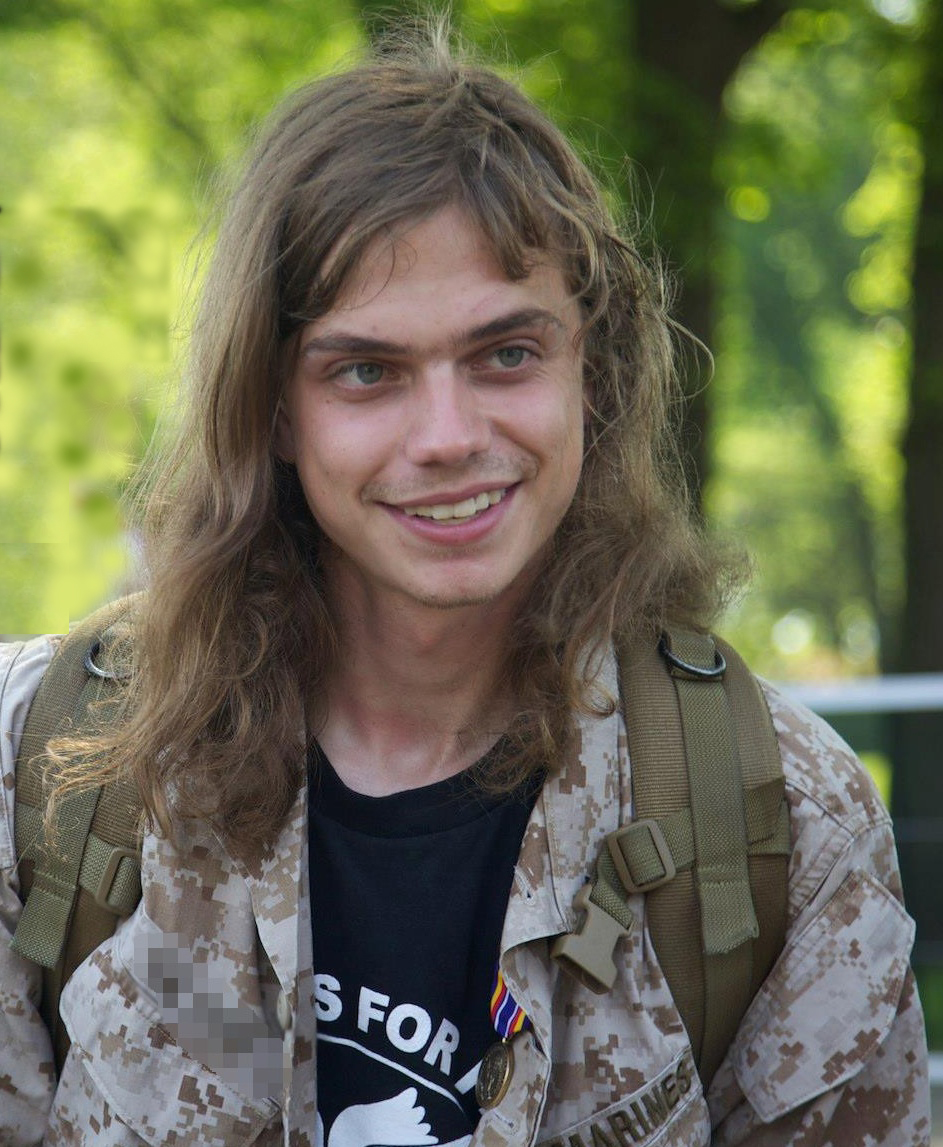
Scott Olsen

Scott Olsen

Scott Olsen


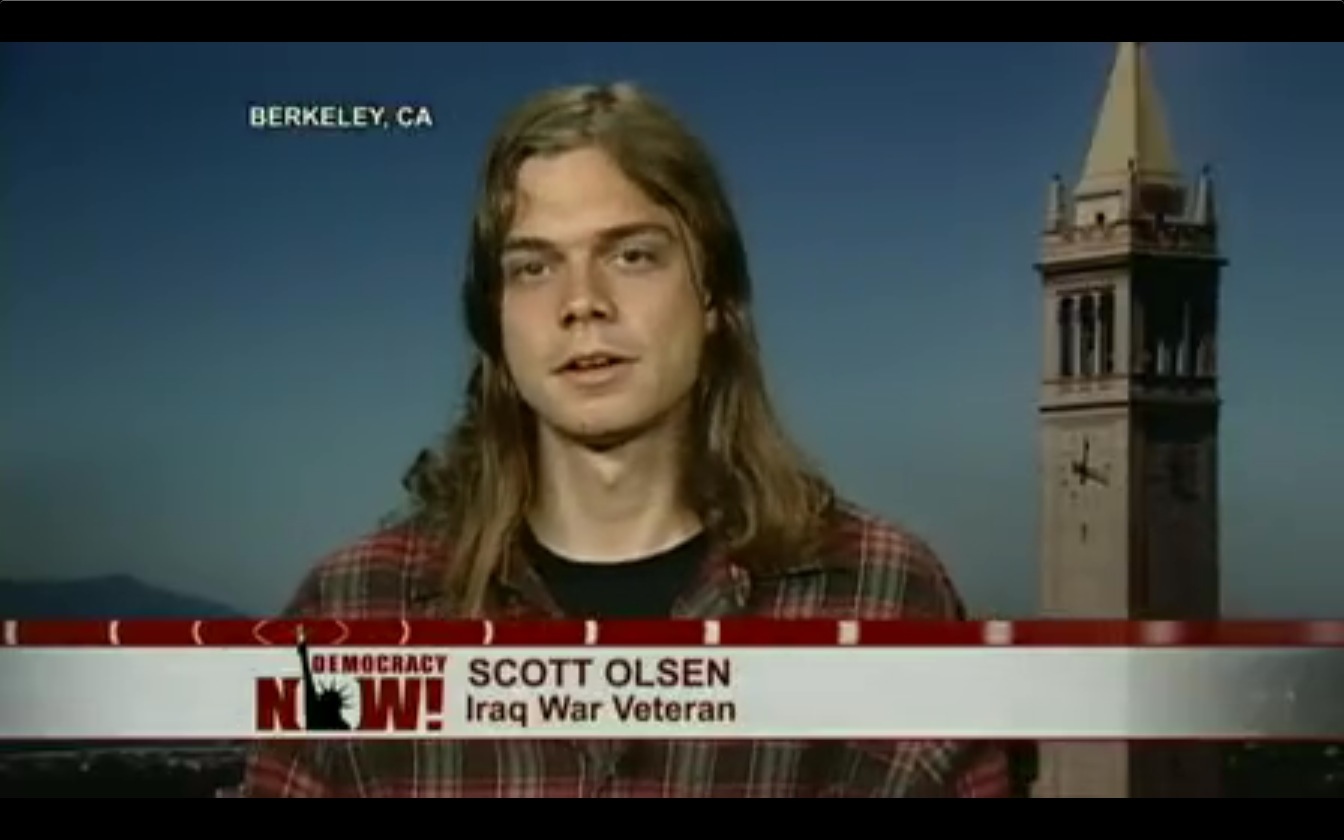
Board member, Iraq Veterans Against the War, survivor of police raid on Occupy.

My name is Scott Olsen. You might remember me as the Iraq War veteran who was shot by the Oakland Police during Occupy.  KPFA was a vital news source for me then and my radio dial was stuck at 94.1FM. KPFA supported me, Iraq Veterans Against the War, and our comrades. allowing us to tell our story – uncut. And now as I no longer live in California, I listen to KPFA over the internet.  Nowhere else do I find its diversity of voices, music, and perspectives and I enter this candidacy in my desire to help protect KPFA as a crucial independent media source.

I currently serve on the board of directors for Iraq Veterans Against the War and I’m familiar with non-profit governance processes. I’ve worked in communications for over ten years– addressing both organizational and technical challenges, In the military I worked with radio. I’m a licensed amateur radio operator –finding creative solutions for connection. I believe these skills can help me to contribute to the KPFA Local Station Board.

Through my experiences with individuals, organizations, the armed services, and communities, I deeply value the wide range of ways that people contribute to community media. I support:

–the right of KPFA unpaid staff to unionize
–creation of new internships
–development of a network for sharing of community audio and video recordings and interviews about local events.
–Developing a more easeful system for people to communicate with KPFA staff and programmers
–Station wide/community advanced planning for events of political, economic, environmental or social significance with possible pre-and-post event interviews, real time audio video live streaming and posting of videos on kpfa.org

I also want to help the station to establish powerful links with listeners and organizations through an active Program Council to give input about new and existing programs based on community needs and interests.

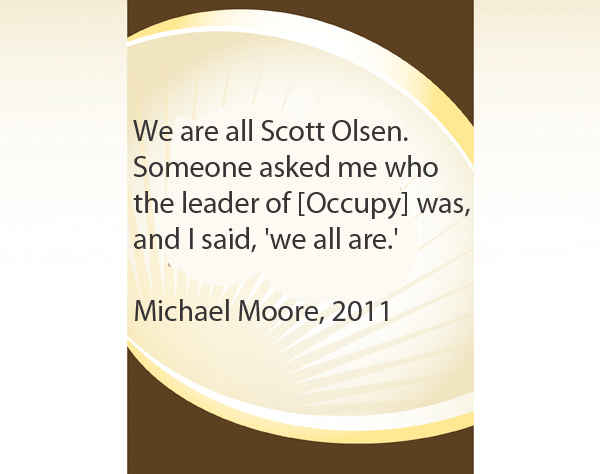
Micheal Moore quoteAnother goal is to see KPFA embrace and expand its internet listenership beyond the signal range. This might include a transition including electronic communication at meetings to allow for wider geographical representation. Also I would like to help build more connection with KPFA’s sister stations and affiliates where we work together to build a strong national Pacifica network to create new possibilities for programming.

Now more than ever, it’s time for media truth telling: about what’s happening with the economy and environment, about what happens when the United States goes to war, about what is happening when people protest, and about how people of color are profiled and killed and African American churches burned. I appreciate those who are addressing these issues, the KPFA programmers who cover them and my United for Community Radio colleagues– working to insure that these stories are heard. I ask for your vote for me and the UCR team. Help us expand KPFA and Pacifica and Liberate Media Together.

Endorsed by:
Veterans for Peace, East Bay Chapter 162
Barbara Lubin
Michael Parenti
Cynthia Johnson
Laura Wells
Scott Olsen best
Scott Olsen appearing on Democracy Now!  To hear the segment, click here:  Democracy Now!

Official Q & A


1.  In what ways are the station moving in a positive direction, that you would want to continue or perhaps improve?


I appreciate KPFA’s use of new technology. The new kpfa.org is livelier, more accessible and mobile friendly. KPFA is also exploring possibilities for podcasting and is using Twitter and Facebook for updates and announcements. I hope they will continue to work on creating an interactive community presence through KPFA social media and help keep growing and reaching out to youth through the global media revolution.I celebrate KPFA’s Spanish programs and those from Native American and Asian communities and the internationally recognized KPFA programmers reporting on Africa and the Middle East, as well as Democracy Now’s major contribution of world-wide event coverageThe KPFA speaker events with noted authors like Cornell West, Naomi Klein and Mario Martinez also help promote greater understanding and connection with the community.


2.  In what ways are the station moving in a negative direction, that you would want to stop or change? What changes would you work for?


I would like to see KPFA increase its partnership with the community.  KPFA programmers, interns and microphones need to be at events taking place all over the Bay Area– north, south, east, in SF, and beyond.  We want live broadcasts, real time audio video live streaming on the website and well labeled archive postings. People like seeing and being interviewed by KPFA and knowing that the KPFA live stream team values quality, safe and ethical coverage. This helps build strong relationships with individuals and organizations and increases memberships.

We also need to create a more organized process for inviting and supporting new volunteers to contribute their time to the station with fund raising, answering in the phone room, hosting and helping at KPFA events, sharing information about programming and the website and helping people interconnect with programming in myriads of ways. I want to help us to build a powerful KPFA free speech community.


3.  What key experience, connections, skills or traits would you bring to the Local Station Board to advance the station’s mission?


My primary Marine Corps job was communications– radios, computers, and everything with more than three blinking lights. I’m a licensed amateur radio operator, and am familiar with FCC regs. I  am on the Iraq Veterans Against the War board of directors and know the challenges of board work and governing a non-profit organization. People tell me I have a dry sense of humor and I suspect that it might be a helpful trait with this eminent local station board.I’m serious, level-headed and responsible. I study information carefully, consider different points of view and work creatively to make sound decisions.My many interactions with KPFA producers and programmers, and other local, international, independent and mainstream media people give me a broad perspective of the broadcasting world. My experiences in Iraq, at Occupy and with veterans help give me a special understanding of the need for independent media today. I seek to use this insight for the common good.


4.  What ideas do you have for helping the station and the Pacifica Foundation meet the financial challenges currently being faced?Money Sign


We are all grateful to those who make large donations to the station and at the same time I would like the station broaden its fundraising approach for people with more limited incomes. This might look like keeping the cost membership at $25 per year, providing additional lower cost premiums during fund drives and having more fund raising cultural events. This could allow for a greater number of people, including diverse communities and youth to be able to help sustain the station. Also a greater community presence where people can meet somebody from the KPFA can also support fund raising. People who know and love KPFA can throw $5 or $10 in the basket and those who are new can learn about the station.Also by supporting the development of great programming and new media innovations for KPFA and the Pacifica national network we build more financially sustainability for all the stations and affiliates.

T.M. Scruggs

T. M Scruggs

T. M Scruggs


Executive Producer at The Real News; ethnomusicologist; Professor Emeritus, University of Iowa; volunteer for community radio stations in U.S., Nicaragua and Venezuela.


My name is T.M. Scruggs and I am running as a Listener Candidate for the KPFA Local Station Board.  I am an educator, musician, and long time social activist involved in community/non-profit media since the mid-1970s. I am a Bay Area native familiar with the issues of our region.

My various forms of organizing and cultural work have proven to me that media is the crucial battleground for providing information and framing issues that determines a society’s political direction. The non-corporate perspective and original investigative reporting that KPFA and sister stations disseminate is an indispensable resource that should be available in every city.

Pacifica’s problems need to be resolved to unleash its full potential. My second career is in finances: I started a successful, growing non-profit. A top priority in my mind is straightening out the financial mess that plagues KPFA and Pacifica.

In recent years I have worked with building The Real News Network (TRNN) where I am Executive Producer. Our project centers around our internet video news site. Our studios, still a work-in-progress, are in Baltimore, and hopefully we can expand to our next choice, Oakland.  I am also on the Board of Advisers of the print-based news site  Truth Out.

KPFA, and Pacifica in general, needs to take more advantage of the internet to help our progressive message and programming reach the broadest possible audience.  KPFA has recently upgraded its web page, an excellent step in a direction with great promise for the future.  This use of newer technology, together with further strengthening of our internship program, will help increase more youth participation, a clear necessity.

I speak fluent Spanish (self-taught in one of the major cities of Latin America: Chicago) and much of my activism has involved Latino communities.  I taught, and did research and solidarity work for several years in Central America and Venezuela.  As the Latino populations around Richmond and San Pablo become “the new Mission” we need to work to include these important communities in KPFA programs and activities.

We can overcome the unnecessary divisiveness that seems to exist between our strong staff and amazing volunteers. Besides my executive-type experience with The Real News, I have both staff and volunteer experience in leftist and community organizations.

Graphic from KBOO Radio's facebook page.

Graphic from KBOO Radio’s Facebook page.

I volunteered on community radio in every city I have lived in since high school: KBOO (Portland; hosted two shows); WUIC (Univ. of Illinois-Chicago; founded Latino student show); KUT (Austin, Texas); KRUI (Iowa City; founded world music show); and several community radio stations in Nicaragua and Venezuela. In the 1970s/80s I was first volunteer and then the one paid “Staff Person” of a then large, collectively-run bookstore in Chicago (similar to SF’s Modern Times in its heyday).

The orientation of United for Community Radio best represents my own. Frankly, in my previous community media experience I have never run across such factionalism, and I pledge to be open minded and creative in improving our treasured KPFA and Pacifica network.

Endorsers: Bruce Dixon; Ed Holmes; Marilyn Langlois; Barbara Lubin; Michael Parenti.


Official Q. & A.


1.  In what ways are the station moving in a positive direction, that you would want to continue or perhaps improve?


The recent upgrade of the website is a positive step. We should continue to increase our internet presence and in general take advantage of new technologies to reach as many people as possible. “Convergence” between the internet and broadcast television is becoming a reality, we need to be aware and integrate new technological changes as they present themselves. I hope we can strengthen two key parts of our station: 1)  the high quality of KPFA’s original investigative reporting which continues to be an invaluable resource; and 2) the new, younger voices that come from the internship program and other efforts for to increase input from the community.


2.  In what ways are the station moving in a negative direction, that you would want to stop or change? What changes would you work for?


The reputation of KPFA for too many is that it is obsessed with internal struggles that paralyze and hinder it from fully realizing the dynamic communication tool it can be. We should work to bring in more community voices that will enrich our programming and connect our station in a more direct and vibrant way to its listeners.

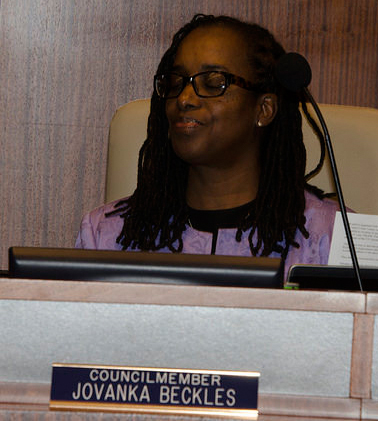
Richmond Progressive Alliance City Council Member, Jovanka Bickles.

Richmond Progressive Alliance City Council Member, Jovanka Bickles.

Engaged and locally grounded reporting and communication is a central reason for the existence of KPFA. For instance, Richmond and San Pablo are quietly becoming “the new Mission” and it begs for involvement and connection with the Bay Area’s main community radio station.


3.  What key experience, connections, skills or traits would you bring to the Local Station Board to advance the station’s mission?


I have extensive experience in community media and leftist organizing, both broadcast radio and more recently internet sites. In my four decades since finishing high school in Millbrae, I have had the honor to become actively involved in community radio stations, starting and hosting shows as a volunteer in every city I’ve lived in, including Managua, Nicaragua and Mérida, Venezuela. I have also been a paid staff member charged with helping facilitate a large volunteer base to run a successful bookstore and community center (New World Resource Center in Chicago) and now a professional paid staff at The Real News.


4.  What ideas do you have for helping the station and the Pacifica Foundation meet the financial challenges currently being faced?

by Alan Cleaver

by Alan Cleaver


In the last two decades I have increasingly studied the political economy to better understand the workings of power, and with a deliberate aim to use this knowledge of finances to help and to fund non-profits. Addressing the financial problems at KPFA and Pacifica, beginning with improving transparency and efficiency, are a top priority for me.I have attended several Local Board meetings but, until I am able to grapple more with the opaque bookkeeping of KPFA and Pacifica, I cannot offer a succinct program to solve these problems.

I strongly support maintaining all of Pacifica – in fact, I would like to see it expand to more cities!  There are troubles throughout Pacifica, but the worst are clearly in New York.  I’m not sure just how much we can help out from the West Coast, but I will do all I can do to try and right this ship: Pacifica is a very important resource and we cannot let it be diminished.


G. Mario Fernandez

G. Mario Fernandez

G. Mario Fernandez


Recent SF State political psychology graduate, former Napa Community College Student Body President, former Occupy Oakland volunteer

Salutations!

I’m Mario Fernandez, a Bay Area Native and a KPFA community listener for over 20 years. I am excited for the opportunity to be part of the Local Station Board. Programs like Hard Knock Radio and La Onda Bajita are part of this amazing institution that represents a community/culture that sits aside from mainstream media.

KPFA isn’t alternative news or music; it is community generated content. The KPFA motto is exactly the view from which I will govern: Listener Supported, Community Powered.

As a representative of the KPFA community, I will work to provide transparency for the process and sustainability of the station budget. Resource improvement for staff—paid & unpaid—is necessary to the improvement of the station in terms of technology and interpersonal relationships. For the community, the re-establishment of the program council would engender a stronger connection with the station and generate more grassroots content.

The time I have spent as a student-representative on numerous committees involved in various projects (e.g. Get Out the Vote drives, legislative visits, funding for higher education demonstrations, etc.) shows that I know the importance of strategic planning and the necessity of a proper budget.

YOUR support and power are the motivational forces of KPFA. My community empowerment comes from my involvement in local politics from Occupy Oakland to Black Lives Matter and recently the Save E. 12th St. Parcel and highlights my activism. The community support I elicit is part of what I am when I volunteer at Park Community Garden or assist with our neighborhood clean-up out near West Oakland. This is what you give KPFA and this is what you’ll get from me as your local station board representative: support and power.

Thank you to the United for Community Radio (UCR) group for their endorsement of my candidacy. Both mine and their views overlap for a more sustainable, responsible, and community connected station.

My endorsers include: Bruce Dixon, Black Agenda Report; former local station board members Chandra Hauptman, Cynthia Johnson, and Joe Wanzala; and, Marylin Langlois, Richmond Planning Commissioner.

Please feel free to contact me through the UCR (www.RadioUCR.com) website or my Facebook: www.facebook.com/awesomemario

In Solidarity,

G Mario Fernandez

Official Q. & A.

1.  In what ways are the station moving in a positive direction, that you would want to continue or perhaps improve?

KPFA provides amazing music and great a great perspective of national and international news not typical of mainstream media.  The station’s ability to now live stream is a great use of technology and shows its ability to evolve in the dynamic landscape of media.


2.  In what ways are the station moving in a negative direction, that you would want to stop or change? What changes would you work for?

Accounting process 1This station needs more emphasis on its respective communities and to engender more involvement with local interviews with locals and local events. KPFA also ought to have a more transparent and sustainable budget given that the station is wholly listener supported.


3.  What key experience, connections, skills or traits would you bring to the Local Station Board to advance the station’s mission?

I bring my passion and fervor for social justice and my community, my understanding of specific accounting practices, and my organizing/organizational skills. I have worked on political campaigns and have been a student-representative and leader at the local and state levels, so I am familiar with this type of representational setting. I recently graduated with my degree in Political Psychology from San Francisco State University, and I have been in involved in the Black Lives Matter movement and with Occupy Oakland. This is the type of work for which I am passionate.


4.  What ideas do you have for helping the station and the Pacifica Foundation meet the financial challenges currently being faced?

Of course, a sustainable and transparent budget would make it easier assess the fiscal future of KPFA, but there is at least one significant solution to this issue: fix the financial errors that cost KPFA the CPB grant. Constant on-air fundraising and the grant aside, the only other way to get the needed money to operate is to move beyond the airwaves and solicit our residents and listeners on the internet and in-person at local events.