Democracy Now! on KPFA — UCR wanted Dem Now! aired at 7 a.m., when most people listen

Please follow and like us:


By:  Mara Rivera DN
Save KPFA is apparently claiming that United for Community Radio (UCR) wanted to eliminate the show — this is UNTRUE. United for Community Radio has always wanted Democracy Now! to air at 7 a.m. on KPFA.


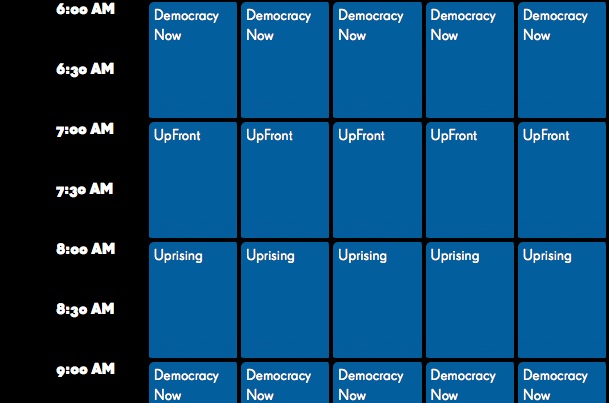
At the time in 2011 (and as it is now) KPFA airs Democracy Now two times each morning, at 6 a.m. and again at 9 a.m.  UCR wanted Democracy Now to be on the airwaves one time in the morning, at 7 a.m.  As Richard Phelps says, you put your most listened to program at the most listened to time. Therefore, UCR wanted Democracy Now to have one slot in the program line-up, at 7 a.m.  This would open the 9 a.m. slot for additional local programming.


The Save KPFA forces wanted to keep drive time for the paid staff, apparently so that paid staff can claim that their programs are the biggest fundraisers for the station. More information can be found here, in an article written at the time these events were happening.


The article, written in 2011 by Marc Sapir states:

[T]he governments of Tunisia and Egypt have fallen and massive non-violent uprisings are occurring throughout North Africa and the Arabian peninsula, all this widely covered daily on KPFA which recently became the only national network carrying Al Jazeera-English. In addition, the staff of the program Voices of Middle East and North Africa put together extended shows that aired in prime time with fantastic commentary from experts and activists rarely heard anywhere in U.S. media. At the same time Amy Goodman’s Senior Producer, SA Kouddous, an Egyptian-American, traveled to Egypt where he was on the scene daily reporting from Tahrir square as well. Through the good sense of Pacifica ED, Arlene Engelhardt, Goodman’s show, Democracy Now (KPFA’s most listened to program) is now running in the 7 a.m. drive time slot, complemented by a diverse and local Morning Mix show at 8-9 a.m. which has also brought to KPFA airwaves many new voices and perspectives.

Save KPFA Candidate said Palestinian Children’s Art “Not Appropriate”

Please follow and like us:

(Since this information emerged, Hilmon Sorey was quietly dropped from the Save KPFA website and the official website says “candidacy withdrawn”)

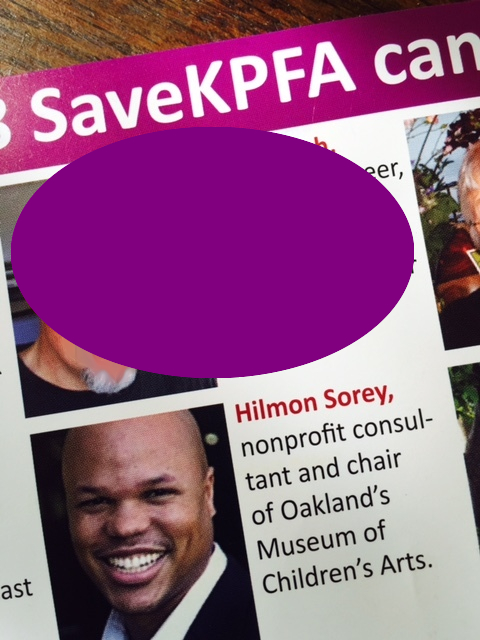
In 2011, Oakland’s Museum of Children’s Art abruptly cancelled a planned exhibition of art created by children in the Palestinian occupied territories of the West Bank and the Gaza Strip.  At the time, Museum board chair (current Save KPFA candidate) Hilmon Sorey stated that the art was “not appropriate” for the Museum.

UCR says: “This kind of candidate is NOT APPROPRIATE for the KPFA Local Station Board.”

The following open letter was sent by Barbara Lubin, executive director of the Middle East Children’s Alliance.

imageedit_7_6209691148

From: Barbara Lubin
Date: Tue, Oct 27, 2015 at 11:22 AM
Subject: Hilmon Sorey

I received a letter today asking me to vote for the new KPFA Board of Directors and I was shocked to see Mr. Hilmon Sorey’s picture and name on it.

I don’t know if you remember when MECA brought the Children’s Art Exhibit to the U.S. from Gaza.

We spent 6 months working with the staff of The Museum of Children’s Art in Oakland.

They had agreed to let us hang the exhibit at the museum for 2 months during which time we would have many small events with children and teachers.

We were all very excited but that changed after a visit from Hilmon Sorey who was chair of the Museum’s Board.

He came to MECA’S office 2 weeks before the exhibit was to open and informed us that the Museum had changed their mind and we would have to look elsewhere for a place to hang the pictures.

The rest of this story is in the book we had published and I will get to you.

I have been thinking about all of this and all the pain that we here at MECA went through and I asked myself this question “with all the problems that KPFA has do we really need a person like Mr. Sorey on our Board?”

He is not to be trusted and when push comes to shove he will do what the Zionist community tells him to do.

We received hundreds of letters from all over the world condemning him for his lack of leadership but mostly for insulting the Palestinian children who drew these pictures.

Barbara Lubin
Middle East Children’s Alliance
Web: www.mecaforpeace.org

Maia Project: Bringing clean water to children in Palestine
www.mecaforpeace.org/project/maia-project

Press coverage of the incident:

San Francisco Chronicle

Daily Kos

Huffington Post

VOTE!!! 

UNITED FOR COMMUNITY RADIO CANDIDATES

KPFA LOCAL STATION BOARD ELECTION

Secret Plot Revealed to Hijack Pacifica’s Broadcast Licenses & Assets

Please follow and like us:

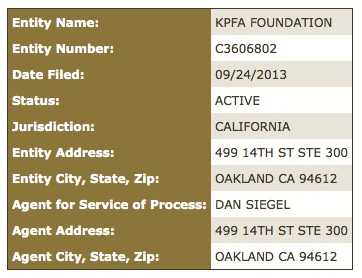
Documents registered with the California Secretary of State for a private “foundation” called the “KPFA Foundation seem to be part of a conspiracy by “SaveKPFA” insiders to gain total control of KPFA (under the guise of protecting KPFA) and to “capture” its license in the event of Pacifica’s dissolution. Further, it appears to be an attempt to privatize the Pacifica Foundation for the benefit of a few instead of the many. These documents were recently uncovered by Pacifica’s National Board (PNB) Secretary Janet Kobren, a United for Community Radio (UCR) candidate and whistleblower.KPFA_Foundation

Here’s what was revealed:
In September 2013, PNB director, former PNB chair/interim Executive Director (iED) Margy Wilkinson registered the above named shadow corporation with the California Secretary of State at the address of Siegel & Yee, the law firm of former PNB director and current Pacifica legal counsel Dan Siegel. They kept this information hidden from the KPFA listeners, the Local Station Board (LSB) and the Pacifica National Board (PNB) until its discovery only recently.

In addition to usurping Pacifica’s trademarked “KPFA” call letters, this shadow corporation also adopted Pacifica’s Articles of Incorporation that includes its Mission Statement. When asked to explain, Siegel and Wilkinson admitted that they created this shadow corporation to acquire the licenses and assets of Pacifica (estimated to be worth more than $100 million) in case Pacifica went bankrupt and/or was taken over by creditors or the government.

The establishment of this covert “KPFA Foundation” raises the question of whether some of the decisions Wilkinson made when overseeing Pacifica’s finances during her tenure as interim ED contributed to the current disastrous financial state of the Pacifica Foundation and its stations. What might be considered gross ineptitude was so systematic that it appears to be an intentional attempt to bankrupt Pacifica and its stations, in order to gain control of KPFA from Pacifica via the “KPFA Foundation”  At the very least, this constitutes a severe conflict of interest and ethical violation by Wilkinson and Siegel.

How does this relate to the KPFA Local Station Board election?

Your Vote Matters (photo credit below)

Your Vote Matters (photo credit below)

As a KPFA member, your vote will elect members to the KPFA LSB. This board not only sets policy for KPFA, it also selects four of its members to sit on Pacifica’s National Board. Right now, the Siegel-Wilkinson “Save KPFA” faction has a majority of KPFA’s seats on this board. This election can overturn the “Save KPFA” majority of seats on the board and enable the new local and national boards to block their plan to hijack Pacifica’s licenses. “Save KPFA’s” Brian Edwards-Tiekert’s recent motion to get the KPFA LSB to overstep its powers and ratify the creation of thesecret “KPFA Foundation” was stopped by UCR LSB members. But it could still be approved if the LSB majority stays the same in this election.
The United for Community Radio (UCR) candidates are committed to doing everything in their power to block “Save KPFA” from dismantling KPFA and Pacifica and walking away with KPFA’s licenses and assets.

     HELP PACIFICA REMAIN INTACT ~
RESCUE KPFA
~  VOTE FOR THE UCR 9

————

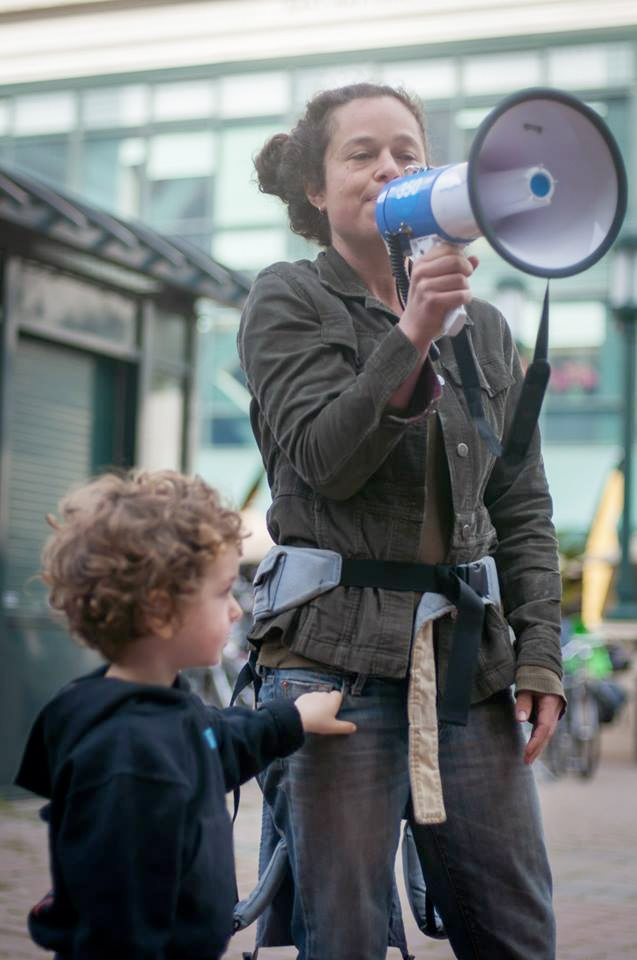
“Your Vote Matters” photo by Brooke Anderson from a rally for the Right to a Roof / El Derecho al Techo in Santa Rosa, California, Summer 2015.


A Partial Financial Landscape of KPFA

Please follow and like us:

Compiled by Janet Kobren, including notes by Kobren interspersed 
This article is supplemental to Does the $400K Bequest Belong to KPFA

FY2015 KPFA BUDGET APPROVALS BY KPFA LOCAL STATION BOARD (LSB) AND PACIFICA NATIONAL BOARD (PNB) NATIONAL FINANCE COMMITTEE (NFC)

FY2015 KPFA budget (Approved LSB: 10/18/14; Approved NFC: 10/23/14)

—————————————————————————————————

COMPARISONS OF KPFA BUDGET FIGURES (2013 – 2016)

Kobren notes the following:

The KPFA GM is responsible for preparing and managing the KPFA budget while the KPFA LSB is responsible for approving the KPFA budget. What would also be useful would be to have the listener membership numbers over this same time period.
No Coal in Oakland Rally. Photo by Brooke Anderson

“Speaking to the Crowd” ~No Coal in Oakland Rally~ Photo by Brooke Anderson

Below are KPFA LSB approved budget figures from FY2013 – FY2016:

Budgeted Fund Drive Days (Assumptions)
FY2013 = 89 days

FY2014 = 79 days
FY2015 = 89 days (actual was 65 days because 24 days — April 15 and April 27-May 19 fund drive days were cancelled)
FY2016 = 71 days

Projected (Budgeted) Listener Support Money
FY2013 = $2,680,476

FY2014 = $2,705,000 (up 1%- from FY2013 budget)
FY2015 = $2,741,378 (up 1%+ from FY2014 budget)
FY2016 = $2,655,003 (down 3%+ from FY2015 budget)

Actual Listener Support reported in the following year’s budget (varies depending on what report one looks at)
FY2012 = $2,539,180 (as reported in FY2015 budget as audited amount)
FY2013 = $2,552,174 (as reported in FY2016 budget; note: up 1%+ from FY2012 budget)
FY2014 = $2,529,196 (as reported in FY2016 budget; down 1%- from FY2013 budget)
FY2015 = $2,607,297 (up 1%+ from FY2014 budget)

Total Budgeted Revenue
FY2013 = $3,652,756

FY2014 = $3,461,764 (down 5%+ from FY2013 budget)
FY2015 = $3,486,708 (up .5%+ from FY2014 budget)
FY2016 = $3,337,510 (down 4%+ from FY2015 budget)

Actual Total Revenue (varies depending on what report one looks at)
FY2013 = $3,652,756
FY2014 = $3,461,764 (down 1%- from FY2013 budget)
FY2015 = $3,486,708 (up 1%+ from FY2014 budget)
FY2016 = $3,337,510 (down 1%- from FY2015 budget)

Total Budgeted Operating Expenses
FY2013 = $3,060,229 (Note: FY2013 Audit indicated $2,811,334, which is $3,295,986 minus $484,652 for Central Services)

FY2014 = $2,929,063 (down 4%+ from FY2013 budget)
FY2015 = $3,486,708 (up 19%+ from FY2014 budget)
FY2016 = $2,862,049 (down 17%+ from FY2015 budget)

Total Budgeted Expenses
FY2013 = $3,582,922 (Note: FY2013 Audit lists $3,295,986)

FY2014 = $3,457,903 (down 4%- from FY2013 budget)
FY2015 = $3,409,836 (down 1%+ from FY2014 budget)
FY2016 = $3,333,505 (down 2%+ from FY2015 budget)

Net Income
FY2013 = $69,834 (based on 8/3/12 email attachment from KPFA LSB Treasurer Whipperman)

FY2014 = $3,861
FY2015 = $76,872
FY2016 = $4,005

Surplus (Deficit)
FY2013 = $69,834 (based on 8/3/12 email attachment from KPFA LSB Treasurer Whipperman)

FY2014 = $ 3,861
FY2015 = $50,496
FY2016 = $ 4,005

Some additional notes by Kobren:income

Net Income and Surplus (Deficit), otherwise know as Reserves, budget numbers have fluctuated, with FY2016 being the worst yet regarding having reserves.

Also note that the KPFA LSB is the only LSB that has no Finance Committee which means that the KPFA Business Manager (with input by the KPFA GM) with input from the KPFA LSB Treasurer (who gets perfunctory input from the LSB) has total control of the budget items that are provided to the LSB which is empowered by the bylaws to approve the budget. The other four stations have Finance Committees that allow input from committee members (LSB members, staff and the public) into the budget process and the final draft budget that is presented to the LSB for approval.

But also when it comes to KPFA, the LSB is only provided the version to be approved either in the middle of the night the night before the LSB meeting or at the LSB meeting itself, and never with formulas, providing little if no time for LSB members to independently and responsibly review what they are expected to vote on. What happens in the end is that the LSB gets snowed under with multiple types of related documents distributed during the meeting by the Business Manager who proceeds to explain them, with little if no opportunity for LSB members to thoroughly review and critique the documents.

—————————————————————————————————

FY2015 KPFA BUDGET APPROVAL BY PNB WITH FINANCIAL CRISIS MANAGEMENT PROVISOS AND AN AMENDMENT

FY2015 KPFA budget with Financial Crisis Management provisos and as amended (Approved PNB:1/8/15)

—————————

FY2015 KPFA – Financial Crisis Management provisos (Approved NFC: 1/5/15; Approved PNB: 1/8/15)

For the next six months, KPFA Management shall require approval from either Pacifica’s CFO or interim Executive Director prior to making any disbursement or incurring any expense greater than $1,000 for other than for rent, utilities, payroll, and other regular, recurring expenses.

The PNB directs the interim Executive Director to direct Management at KPFA to prepare within 30 days a plan for reducing expenses by at at least $250,000 per year in order to bring KPFA’s operating deficit under control.” (Passed without objection)

FY2015 KPFA budget amendment (Approved PNB: 1/8/15)

Before any union and line staff reduction in force occurs, a formula for concurrent management cuts must be approved by the PNB

—————————————————————————————————

KPFA GENERAL MANAGERS STATE OF THE STATION REPORT

Dated: January 29, 2015

Excerpts:

“The PNB Resolution:

The PNB has requested that the KPFA management create a plan to make $250 thousand dollars in cuts, which would include a formula for reduction in management salaries”. . .

“The management team has met with the union and proposed a cut to our benefits package, with a change in co-pay from $10 to $20. That would be a yearly savings of $42 thousand dollars a year. Since this would alter the contract, the union must have a secret ballot vote on the proposal.”

————————————————————————————————

TWO LARGE BEQUESTS IN THE PIPELINE

Save East 12th St Rally. Photo by Brooke Anderson.

Save East 12th St Rally. Photo by Brooke Anderson.

Kobren notes the following:

There apparently had been leaks from within KPFA and/or the national office regarding the two large bequests totaling $958,000 that had been in the pipeline, one since to 2012 and the other since 2014.

Once both bequests were probated, the checks were deposited in KPFA’s bank account in March 2015.

————————————————————————————————

APRIL AND MAY 2015 KPFA GENERAL MANAGERS REPORT

Kobren notes the following:

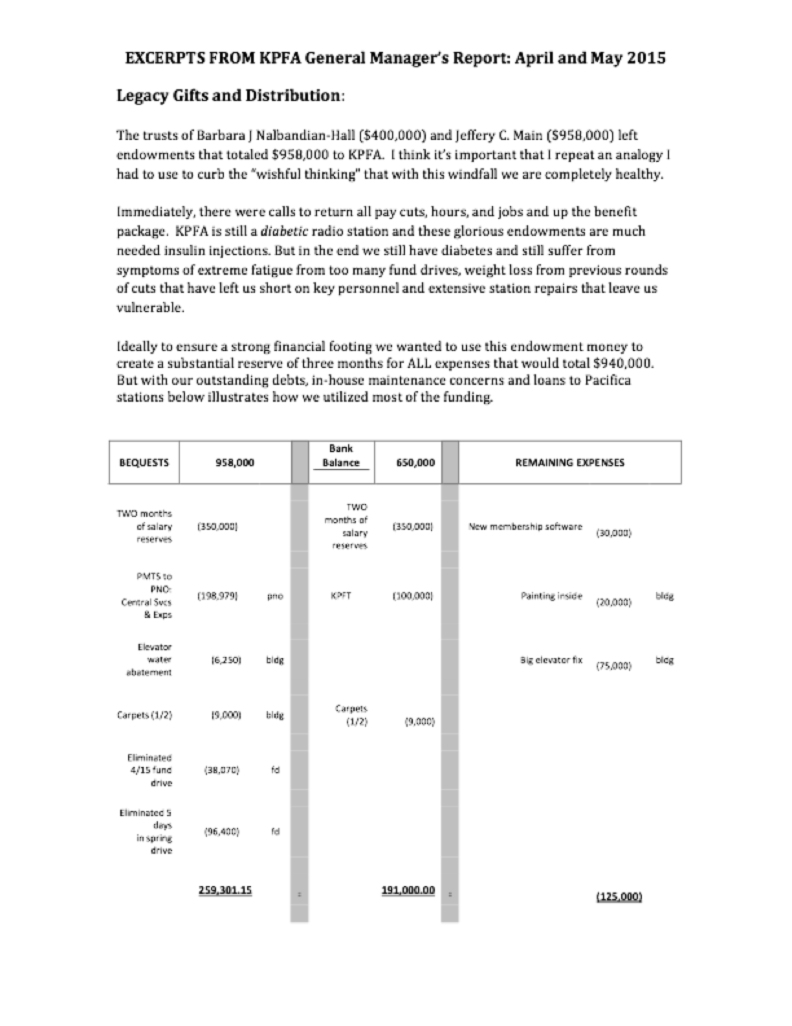
In KPFA GM McCoy’s April and May 2015 General Manager’s Report (also sent to the PNB for the June in-person meeting) he spelled out plans for spending the two bequests, as follows:

Of the total $958,000 (see chart below for reference),

$149,720 had already been spent on KPFA (96,400+38,070+9,000+6,250) — see column 1,

and an additional $9,000 was “committed” to be spent on KPFA — see column 2,

which comes to a total of $158,720 allocated.

Then there is a total of $233,396 that went towards KPFA’s Central Services ($198,979 to PNO/$34,417 to PRA) — see column 1,

which comes to a total of $392,116 allocated.

And then you have $118,976 that “KPFA” loaned to WBAI and KPFT (100,000+18,976) — see column 1 and column 2,

which comes to a total of $511,092 allocated.

Which leaves a balance of $446,908 from the total $958,000.

This was back in June.

But $350,000 had also been “reserved” for KPFA salaries — see column 1. Is that still in reserve or has that been spent?

If spent, that would leave a balance of $96,908 of the total $958,000.

There might have been more expenditures on that balance since June as well.

Note that part of the two bequests was being applied as “reserves” (at least to paid staff salaries thus the decision to forego the 2015 Spring fund drive), however it is not clear if the two-month salary reserves have already been exhausted, i.e., are there still any reserves? But since KPFA left itself dependent on the two bequests, it is not known what the financial situation within KPFA currently is or will be once the October 29, 2015 motion passed by the PNB is executed.

————————————————————————

APRIL/MAY 2015 KPFA GM REPORT EXCERPTS
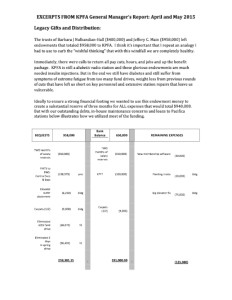
Quincy Chart

11-3-15

Bringing Peace to KPFA

Please follow and like us:

icons-842868_640


By Akio Tanaka 10-15-15
[KPFA LSB Member 2006-2012]


Underlying Problems
Whenever there is a conflict, there is always an escalation in rhetoric, such as the divisive and inflammatory charge a few years ago that the Pacifica National Office engaged in union busting, and the labeling of volunteers who worked on the Morning Mix as scabs. We should avoid getting caught up in rhetoric and address real problems and concerns.

The underlying problem is financial. The trauma of the layoffs in 2010 was the consequence of the station increasing the payroll by 140% between 2000 and 2009. Even with the cuts made in 2010, income has not kept up with the expenses.

AndresSoto

Andrés Soto

One area of friction is programming. It stands to reason that a trade union looking after the financial security of its members will prefer programming which appeals to a more affluent audience. But the mission of Pacifica is to be the commons of the airwaves, to represent a broader and more diverse community, to include marginalized and under-represented voices.   (Lew Hill, the founder of Pacifica, was a conscientious objector. One program exemplifying this diversity – and which saved KPFA money — was the Morning Mix, which included members of the local activist community, like Peter Phillips of Project Censored, Andres Soto of Richmond Progressive Alliance, and the well-produced “Poor News” and “Strike Debt” segments. However, in 2014 it was inexplicably replaced by a show produced in L.A. rather than being supported and improved by KPFA paid staff. (Paid staff member Davey D did support this show.)

An area of friction is the working relationship between paid and unpaid staff. Originally, both were represented by one union. In 1996, it was replaced by a union which only represented the paid staff. This created a class system resulting in an uneasy working relationship between the paid and the unpaid staff.

Possible Solutions

So what to do with these conflicting needs and interests? How does a union look after the financial security of its members in a non-profit organization that relies on donations by listeners and must live within a balanced budget?

The management and the union should work out a staffing level that is sustainable over the economic ups and downs, and avoid the temptation to add more paid staff during the economic boom times as happened in 2001-2006. Achieving a sustainable paid staffing level is a challenge, but it would help address the main source of tension. It could curtail the seemingly endless appeal for funds.

The primary task of the station should be to fulfill the mission of Pacifica.

It is important to note that KPFA has always relied on a large number of volunteers (e.g. Alan Watts), who produce the majority of programming. At KPFA there simply is not enough money to pay all those who contribute to the station. Progressive organizations like KPFA should have one all-inclusive union for everyone who works at the station. While the notion of workers’ rights resonates to all within the progressive community, it must be remembered that it is about respecting and honoring ALL workers.

Instead of taking sides, we as listeners should encourage the paid and unpaid staff to work together and help each other to produce the best in progressive radio. It is time for the staff, paid and unpaid, and for the listeners to embrace the democratic victory that was won in the legal and street battles of 1999-2001. It is time to stop dividing the station.

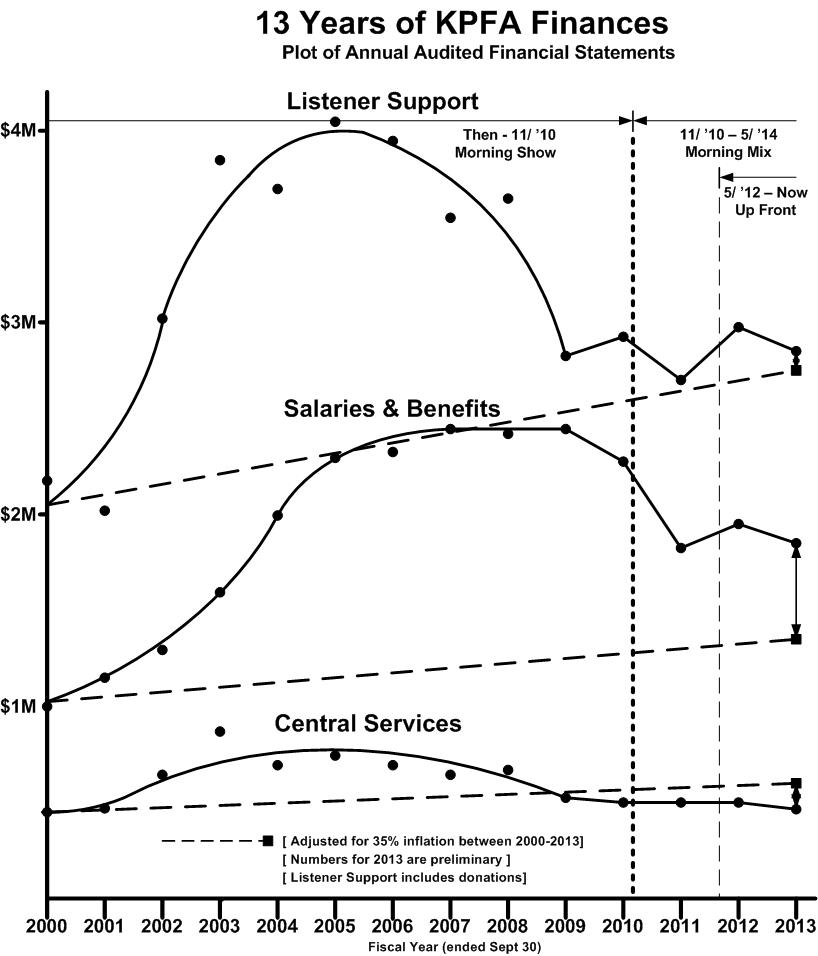
13 Years of KPFA Finances


  1. Listener Support:

The audited financials show that steep decline in Listener Support occurred between 2006 and 2009 before cuts were made in 2010. (Adjusted for inflation, since 2010, Listener Support is back to the 2000 level, irrespective of the morning programming line-up.)

  1. Salary and Benefits:

            The audited financials show that between 2002 and 2006, the station added way too many people (the payroll more than doubled), and between 2006 and 2010, the station, understandably, did not address the steep decline in Listener Support. By the fall of 2010, the station was in danger of insolvency, which is the only reason that the Pacifica National Office stepped in, to bring expenses in line with income. (Adjusted for inflation, even with the cuts that were made in 2010, the current Salaries and Benefits are still above the 2000 level.)

  1. Central Services:

            Central Services pay for network administrative services like FCC licenses, audit, insurance, legal, Pacifica archives, and national programming like Democracy Now! (Adjusted for inflation, since 2010, Central Services has been below the 2000 level.)


Program Council at KPFA

Please follow and like us:

antenna-154946_640


KPFA PROGRAM COUNCIL —

What is it? Why is it important? What did it do? Where did it come from? Why should I care that it is gone?

[Written c. 2009, still relevant today!]

The Program Council (or programming committee) at KPFA has existed since the 1970’s – over 35 years. [45 in 2015.] During that time, its been composed of managers for the departments of public affairs, news, music and arts and humanities, representatives of the hundreds of unpaid programmers, often elected under the supervision of the Unpaid Staff Organization (UPSO) and at various times, technical and operations staff, managers from the apprenticeship program, local board members and listener representatives.

At times it has been facilitated by a program director or coordinator, and sometimes by someone else in the group chosen by the members. The author of this piece served in that role from 2004 to 2007 as a listener representative.

Birthed in the mobilizations of the 60’s and 70’s that demanded a meaningful place at the table for the perspectives of marginalized groups (and created at KPFA a Women’s Desk, a Third World Center, and the Unpaid Staff Organization itself), the program council had the philosophy that collaborative decision making about programming was healthy and desirable for a voice of dissent and resistance. Protected by a confidentiality agreement that allowed staff, volunteers and later listener reps to talk candidly about their programming visions and critiques, the program council always played an important role in airing and discussing contentious issues. During the many years the station lacked a program director (including the years 2000 to 2006), the program council took on much of the responsibility for non-emergency decision-making.

Some of the things accomplished in that period of time:schedule

(In the same interval of time – the only programs added to the schedule by management policy were Against The Grain, Sundays with Peter Laufer (since canceled) and imported programs from New York (Behind The News) and LA (Uprising).

  • Evaluated 2/3 of the current programs with a thorough 5 page evaluation form and programmer briefing
  • Developed a program proposal process for new additions to the grid from community members, processed over 40 demos, interviewed the programmers and developed a waiting list of approved programs.
  • Attempted to implement a contract basis for programming where individual programs would sign an agreement for a program slot for a contained period of time (until the next evaluation – projected for 2 years apart).

(Current system is indefinite until programmer voluntarily relinquishes a slot or is taken abruptly off the air; examples: Youth Radio, Peter Laufer)

The program council couldn’t always solve every contentious issue. In 2003, it was temporarily dissolved when its decision to move Democracy Now! from its current airing time of 6 am and 9 am to one daily 7 am airing failed to be implemented by station management.

When the program council was re-assembled, the Local Station Board passed a motion affirming the decision making power given to it.  It also made a highly controversial decision to place a one year moratorium on new proposals from a group called the Labor Collective.

In 2006, after a long interval without a full-time Program Director, KPFA finally assigned an interim person to the position. Unfortunately, the results were:

  • Suspension of meetings from April 2007 to October 2007
  • Unilateral reduction of meetings from weekly to bi-weekly
  • A statement that the program council was advisory only,
  • Removal of program proposals for long and short-term programs from the review of the council
  • Jettisoning of the approved program waiting list that had been created after the program council slogged through a backload of 20+ proposals between 2004 and 2005
  • Replacement of the established evaluation process with a one-page Survey Monkey online survey.

This is not what the unpaid staff organized, fought and went on strike for in 1970’s

This is not what the listeners envisioned when so many of them marched to protect KPFA in 1999.

KPFA is not to be encompassed by any one single person’s vision. The delivery of the mission depends on many perspectives being brought to bear and on sharing experiences, building understanding and resolving differences. If we cannot do that within our own community and build collaborative working groups, how can we hope to do so out in the world?

All the stakeholders sitting down and hashing out the best way to put the 59,000 watts into service for peace and justice. That’s the mission.

by Tracy Rosenberg, Media Alliance


     2015 Postscript – To date the Program Council has not been reinstated because the SaveKPFA majority on the Local Station Board rejected a democratically-constituted Program Council, as existed before. They preferred one dominated by department heads, which would hardly function as a democratic Council, dedicated to community programming.