Joe Hill’s Last Will, 100 Years Later

Joe Hill 3by Bob English

I dreamed I saw Joe Hill last night,
Alive as you or me …

Swedish-American labor organizer, poet and songwriter Joe Hill was executed 100 years ago on Nov 19, 1915. Born Joel Emmanuel Hagglund, Oct 7, 1879, he emigrated to the US in 1902. Working on the West Coast as a migrant laborer in 1910, he joined the Industrial Workers of the World (IWW), the “Wobblies,” a radical union of immigrants (subjected to the anti-immigrant hysteria of that period), founded on the principle of One Big Industrial Union for all workers. 

Traveling widely and organizing workers under the IWW, Joe Hill was wildly popular and visible as a speaker, writer of satirical poems, political and union songs (based on tunes of the times), which he performed at IWW strikes and rallies.

Would you have freedom from Wage slavery
Would you from mis’ry and hunger be free…

Come, all ye workers, from every land,
Come, join in the grand industrial band;
Then we our share of this earth shall demand…

(Rousing Chorus)

There is pow’r, there is pow’r in a band of workingmen,
When they stand, hand in hand,
That’s a pow’r, that’s a pow’r
That must rule in every land—
One Industrial Union Grand!

“There is Power in a Union” 1913 by Joe Hill

IWW tattoo

IWW tattoo

This year Joe Hill’s life, last hours and legacy to the labor movement and folk music are honored and narrated in a performance and album of his songs, Joe Hill’s Last Will by singer/songwriter John McCutcheon.   The stage play, written by Si Kahn, was first performed in Sebastopol, California 2011.

“Hill channeled his experiences into songs, the first written for the American working class. Those songs helped galvanize the union movement, specifically the IWW, whose activism triggered violent opposition from the wealthy class we now refer to as the ‘1 percent’” (from the show announcement).

As such, he was targeted by the 1% capitalists, particularly the “copper bosses” of Silver King mine, Park City Utah where he was arrested for murder in 1914, framed and convicted. The unjust trial and capital punishment sentence were challenged by a prominent clemency campaign and generated international media attention, union and public protest. In the stage narration of his last hours in jail before his execution at dawn, Hill thought few would remember his life and work.

(Written in his cell, on the eve of his execution)

My will is easy to decide,
For there is nothing to divide.
My kind don’t need to fuss and moan —
“Moss does not cling to a rolling stone.”

My body? Ah, if I could choose,
I would to ashes it reduce,
And let the merry breezes blow
My dust to where some flowers grow.

Perhaps some fading flower then
Would come to life and bloom again.
This is my last and final will.
Good luck to all of you.

“Joe Hill’s Last Will” (lyrics by Joe Hill, music by John McCutcheon)
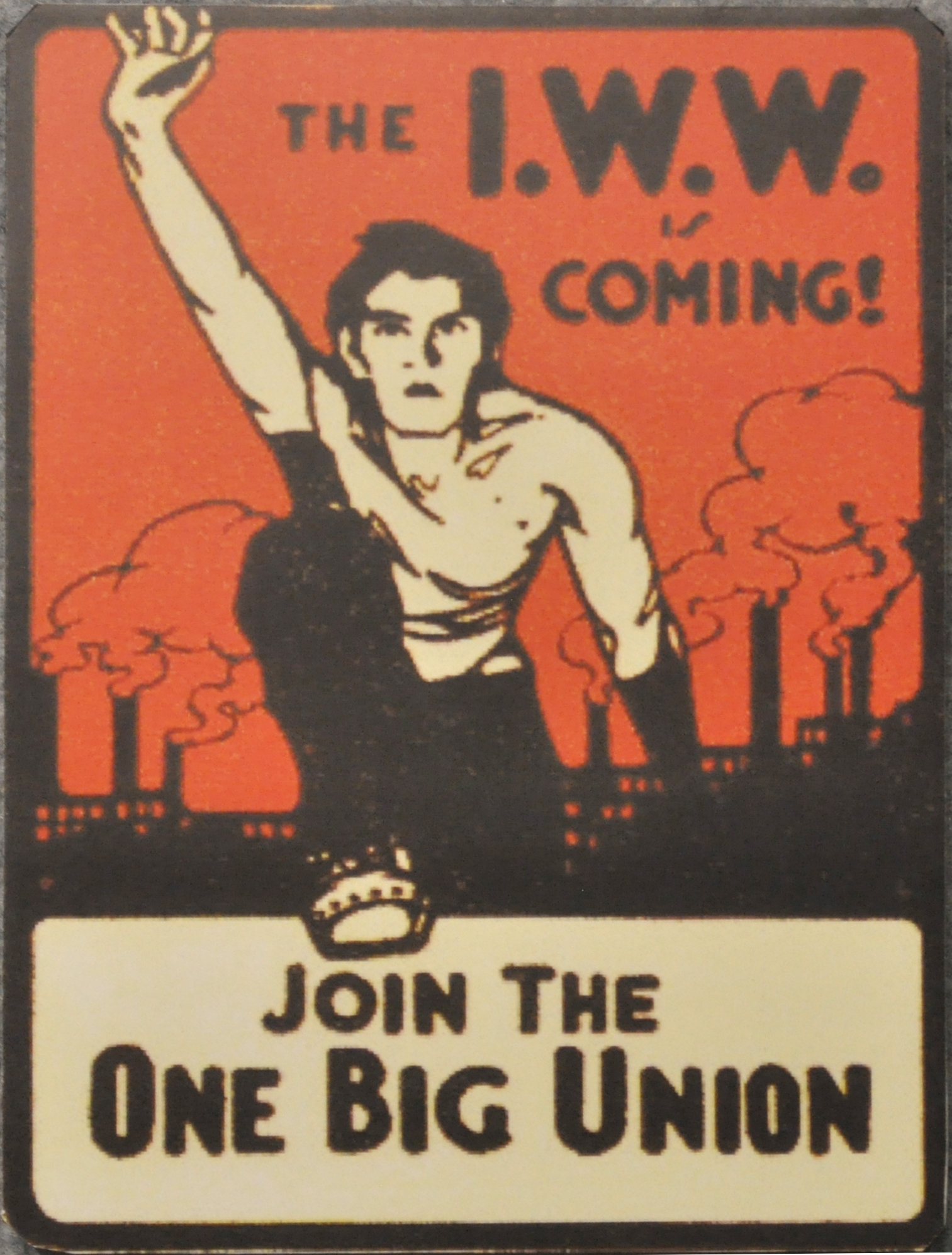
IWW sticker, 1910s, courtesy Wikipedia

IWW sticker, 1910s, courtesy Wikipedia

100 years later Joe Hill is one of, if not the most renowned, beloved and inspiring labor leaders of the 20th century. In this century, he stands Presente! with farm workers and the lowest paid, marginalized, unorganized workers; rank and file members fighting for democratic unions, today’s still militant IWW and International Longshore and Warehouse Union (ILWU).

In October 1960 in Sydney, Australia, the great Paul Robeson performed a powerful rendition of “Joe Hill” to construction workers at the site of the future Sydney Opera House.


Says I, “But Joe, you’re 100 [ten] years dead,”
“I never died,” says he.

And standing there as big as life
And smiling with his eyes
Says Joe, “What they forgot to kill
Went on to organize.

Where working people [men] are out on strike
Joe Hill is at their side

From San Diego up to Maine,
In every mine and mill –
Where working people [men] defend their rights

It’s there you’ll find Joe Hill.

I dreamed I saw Joe Hill last night,
Alive as you or me
Says I, “But Joe, you’re 100 [ten] years dead”,
“I never died,” says he.

“Joe Hill” 1930 by Alfred Hayes [updated for centenary]

Through his progressive songwriting a century ago, Joe Hill articulated and transmitted still current issues of immigrant and workers rights, economic and class inequality, feminism, religion and war. “Casey Jones–The Union Scab,” “The Preacher and the Slave,” “The Tramp,” “The Rebel Girl” and “There is Power in a Union” are folk and union standards.

Critically, Joe Hill inspired the great Woody Guthrie, a primary influence for modern singer/songwriters, including Bob Dylan, Pete Seeger, Huddie Ledbetter (Leadbelly), Phil Ochs, Billy Bragg, ani difranco – and Utah Phillips, who (before McCutcheon) had reintroduced Hill and his music. Their recordings, progressive commentary and connection to Joe Hill are featured in music programs on community radio KPFA 94.1 FM, especially Robbie Osman’s “Across the Great Divide,” now hosted by Kevin Vance Sunday mornings.

Further, the IWW/Joe Hill industrial union model, objectives and vision are central to understanding current issues, dynamics and effectiveness of labor organizing, after a long period of steadily declining, sporadically resurgent union membership and power. As we learn from John McCutcheon’s performance, Joe Hill and IWW regarded exclusive craft/trade unions as self-serving job trusts, often acting as “scab” unions. They would have a similar assessment of the larger, growing but often management friendly, hierarchical, bureaucratic, staff-run business unions  representing service workers and public employees, notably Service Workers International (SEIU).

Currently, there are struggles throughout the labor movement (e.g. National Union of Healthcare Workers defection from SEIU/United Healthcare Workers) for more democratic, “member driven,” inclusive unions, fighting for the interests and benefits of all workers, ready to take on (not accommodate, deal or collaborate with) management, the corporate-governmental complex, political machines and power structures.

These differences and conflicts between industrial and craft or business unions, their effects in terms of representing, including or excluding workers, are analyzed in an upcoming, related article, reviewing recent history and politics of Pacifica-KPFA community radio unions, a complex, controversial and well-documented subject.

———————-

Bob English, from a working class, union family; retired civil service worker, labor democracy activist formerly with SEIU L790 and Public Employees for a Democratic Union; community radio activist formerly with listener groups Coalition for a democratic Pacifica and Peoples Radio.

———————-

Thanks to Eszter Freeman, Attila Nagy (Sonoma Peace Press), Adrienne Lauby (UCR website), Isis Feral and Stan Woods for review/suggestions, editing, images, production; my son Austin and wife Linda Hewitt for review, encouragement and support completing the work;  John McCutcheon, and Dr. Barbara Hodges for inviting us to his inspiring performance of “Joe Hill’s Last Will” at the Palms Playhouse in Winters, California, June 5, 2015.

———————-

Graphics:
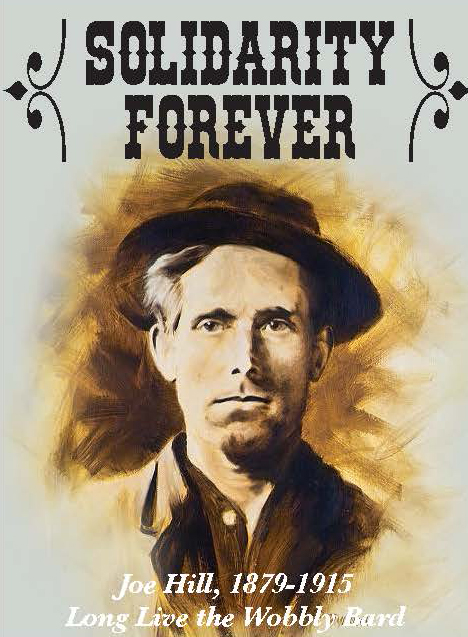
Joe Hill Poster
IWW Tattoo by vonlampard license
IWW sticker 191os
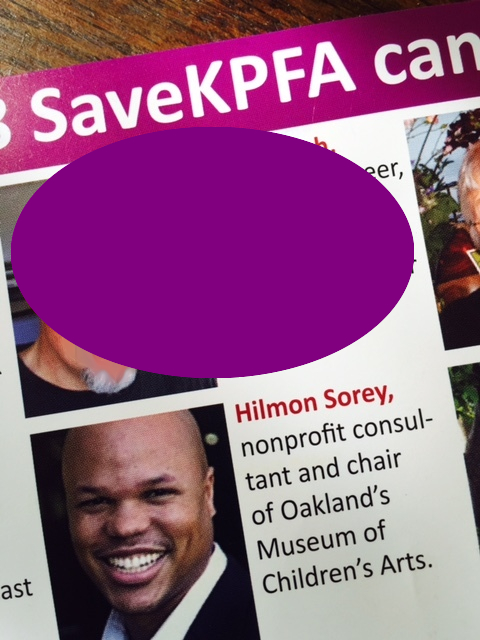


Save KPFA Candidate said Palestinian Children’s Art “Not Appropriate”

(Since this information emerged, Hilmon Sorey was quietly dropped from the Save KPFA website and the official website says “candidacy withdrawn”)

In 2011, Oakland’s Museum of Children’s Art abruptly cancelled a planned exhibition of art created by children in the Palestinian occupied territories of the West Bank and the Gaza Strip.  At the time, Museum board chair (current Save KPFA candidate) Hilmon Sorey stated that the art was “not appropriate” for the Museum.

UCR says: “This kind of candidate is NOT APPROPRIATE for the KPFA Local Station Board.”

The following open letter was sent by Barbara Lubin, executive director of the Middle East Children’s Alliance.

imageedit_7_6209691148

From: Barbara Lubin
Date: Tue, Oct 27, 2015 at 11:22 AM
Subject: Hilmon Sorey

I received a letter today asking me to vote for the new KPFA Board of Directors and I was shocked to see Mr. Hilmon Sorey’s picture and name on it.

I don’t know if you remember when MECA brought the Children’s Art Exhibit to the U.S. from Gaza.

We spent 6 months working with the staff of The Museum of Children’s Art in Oakland.

They had agreed to let us hang the exhibit at the museum for 2 months during which time we would have many small events with children and teachers.

We were all very excited but that changed after a visit from Hilmon Sorey who was chair of the Museum’s Board.

He came to MECA’S office 2 weeks before the exhibit was to open and informed us that the Museum had changed their mind and we would have to look elsewhere for a place to hang the pictures.

The rest of this story is in the book we had published and I will get to you.

I have been thinking about all of this and all the pain that we here at MECA went through and I asked myself this question “with all the problems that KPFA has do we really need a person like Mr. Sorey on our Board?”

He is not to be trusted and when push comes to shove he will do what the Zionist community tells him to do.

We received hundreds of letters from all over the world condemning him for his lack of leadership but mostly for insulting the Palestinian children who drew these pictures.

Barbara Lubin
Middle East Children’s Alliance
Web: www.mecaforpeace.org

Maia Project: Bringing clean water to children in Palestine
www.mecaforpeace.org/project/maia-project

Press coverage of the incident:

San Francisco Chronicle

Daily Kos

Huffington Post

VOTE!!! 

UNITED FOR COMMUNITY RADIO CANDIDATES

KPFA LOCAL STATION BOARD ELECTION

Secret Plot Revealed to Hijack Pacifica’s Broadcast Licenses & Assets

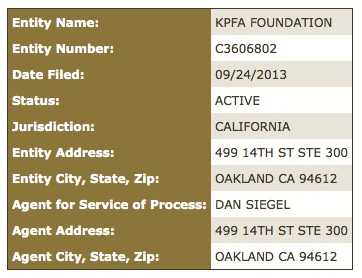
Documents registered with the California Secretary of State for a private “foundation” called the “KPFA Foundation seem to be part of a conspiracy by “SaveKPFA” insiders to gain total control of KPFA (under the guise of protecting KPFA) and to “capture” its license in the event of Pacifica’s dissolution. Further, it appears to be an attempt to privatize the Pacifica Foundation for the benefit of a few instead of the many. These documents were recently uncovered by Pacifica’s National Board (PNB) Secretary Janet Kobren, a United for Community Radio (UCR) candidate and whistleblower.KPFA_Foundation

Here’s what was revealed:
In September 2013, PNB director, former PNB chair/interim Executive Director (iED) Margy Wilkinson registered the above named shadow corporation with the California Secretary of State at the address of Siegel & Yee, the law firm of former PNB director and current Pacifica legal counsel Dan Siegel. They kept this information hidden from the KPFA listeners, the Local Station Board (LSB) and the Pacifica National Board (PNB) until its discovery only recently.

In addition to usurping Pacifica’s trademarked “KPFA” call letters, this shadow corporation also adopted Pacifica’s Articles of Incorporation that includes its Mission Statement. When asked to explain, Siegel and Wilkinson admitted that they created this shadow corporation to acquire the licenses and assets of Pacifica (estimated to be worth more than $100 million) in case Pacifica went bankrupt and/or was taken over by creditors or the government.

The establishment of this covert “KPFA Foundation” raises the question of whether some of the decisions Wilkinson made when overseeing Pacifica’s finances during her tenure as interim ED contributed to the current disastrous financial state of the Pacifica Foundation and its stations. What might be considered gross ineptitude was so systematic that it appears to be an intentional attempt to bankrupt Pacifica and its stations, in order to gain control of KPFA from Pacifica via the “KPFA Foundation”  At the very least, this constitutes a severe conflict of interest and ethical violation by Wilkinson and Siegel.

How does this relate to the KPFA Local Station Board election?

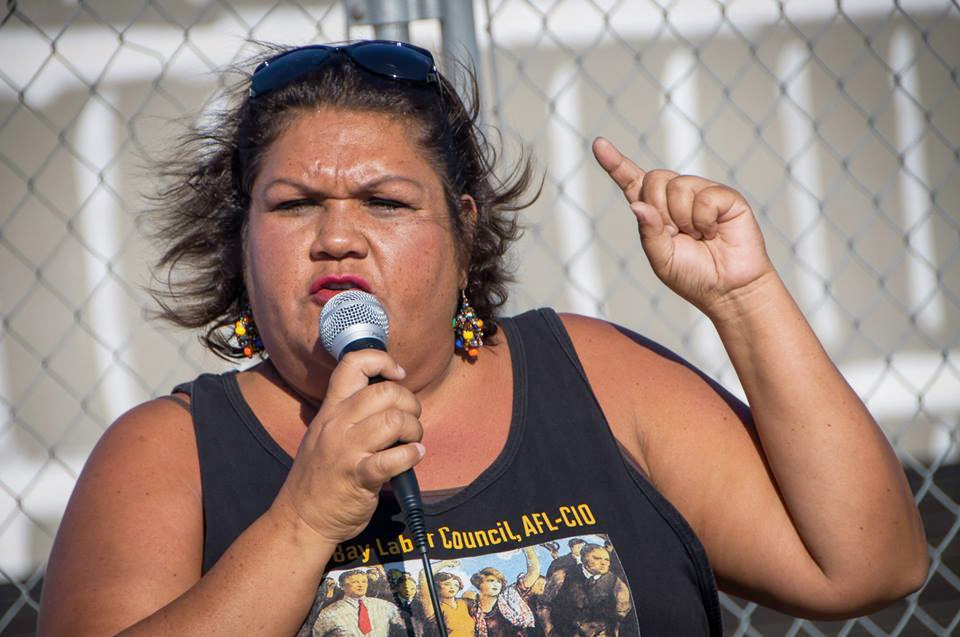
Your Vote Matters (photo credit below)

Your Vote Matters (photo credit below)

As a KPFA member, your vote will elect members to the KPFA LSB. This board not only sets policy for KPFA, it also selects four of its members to sit on Pacifica’s National Board. Right now, the Siegel-Wilkinson “Save KPFA” faction has a majority of KPFA’s seats on this board. This election can overturn the “Save KPFA” majority of seats on the board and enable the new local and national boards to block their plan to hijack Pacifica’s licenses. “Save KPFA’s” Brian Edwards-Tiekert’s recent motion to get the KPFA LSB to overstep its powers and ratify the creation of thesecret “KPFA Foundation” was stopped by UCR LSB members. But it could still be approved if the LSB majority stays the same in this election.
The United for Community Radio (UCR) candidates are committed to doing everything in their power to block “Save KPFA” from dismantling KPFA and Pacifica and walking away with KPFA’s licenses and assets.

     HELP PACIFICA REMAIN INTACT ~
RESCUE KPFA
~  VOTE FOR THE UCR 9

————

“Your Vote Matters” photo by Brooke Anderson from a rally for the Right to a Roof / El Derecho al Techo in Santa Rosa, California, Summer 2015.


Bringing Peace to KPFA

icons-842868_640


By Akio Tanaka 10-15-15
[KPFA LSB Member 2006-2012]


Underlying Problems
Whenever there is a conflict, there is always an escalation in rhetoric, such as the divisive and inflammatory charge a few years ago that the Pacifica National Office engaged in union busting, and the labeling of volunteers who worked on the Morning Mix as scabs. We should avoid getting caught up in rhetoric and address real problems and concerns.

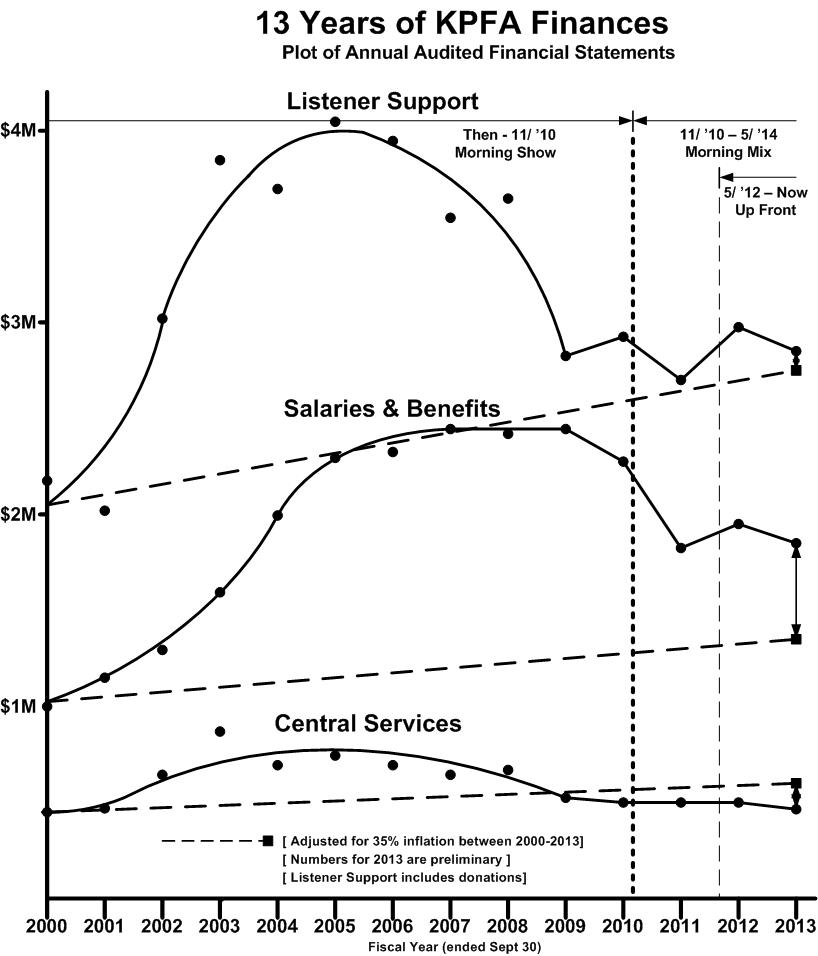
The underlying problem is financial. The trauma of the layoffs in 2010 was the consequence of the station increasing the payroll by 140% between 2000 and 2009. Even with the cuts made in 2010, income has not kept up with the expenses.

AndresSoto

Andrés Soto

One area of friction is programming. It stands to reason that a trade union looking after the financial security of its members will prefer programming which appeals to a more affluent audience. But the mission of Pacifica is to be the commons of the airwaves, to represent a broader and more diverse community, to include marginalized and under-represented voices.   (Lew Hill, the founder of Pacifica, was a conscientious objector. One program exemplifying this diversity – and which saved KPFA money — was the Morning Mix, which included members of the local activist community, like Peter Phillips of Project Censored, Andres Soto of Richmond Progressive Alliance, and the well-produced “Poor News” and “Strike Debt” segments. However, in 2014 it was inexplicably replaced by a show produced in L.A. rather than being supported and improved by KPFA paid staff. (Paid staff member Davey D did support this show.)

An area of friction is the working relationship between paid and unpaid staff. Originally, both were represented by one union. In 1996, it was replaced by a union which only represented the paid staff. This created a class system resulting in an uneasy working relationship between the paid and the unpaid staff.

Possible Solutions

So what to do with these conflicting needs and interests? How does a union look after the financial security of its members in a non-profit organization that relies on donations by listeners and must live within a balanced budget?

The management and the union should work out a staffing level that is sustainable over the economic ups and downs, and avoid the temptation to add more paid staff during the economic boom times as happened in 2001-2006. Achieving a sustainable paid staffing level is a challenge, but it would help address the main source of tension. It could curtail the seemingly endless appeal for funds.

The primary task of the station should be to fulfill the mission of Pacifica.

It is important to note that KPFA has always relied on a large number of volunteers (e.g. Alan Watts), who produce the majority of programming. At KPFA there simply is not enough money to pay all those who contribute to the station. Progressive organizations like KPFA should have one all-inclusive union for everyone who works at the station. While the notion of workers’ rights resonates to all within the progressive community, it must be remembered that it is about respecting and honoring ALL workers.

Instead of taking sides, we as listeners should encourage the paid and unpaid staff to work together and help each other to produce the best in progressive radio. It is time for the staff, paid and unpaid, and for the listeners to embrace the democratic victory that was won in the legal and street battles of 1999-2001. It is time to stop dividing the station.

13 Years of KPFA Finances


  1. Listener Support:

The audited financials show that steep decline in Listener Support occurred between 2006 and 2009 before cuts were made in 2010. (Adjusted for inflation, since 2010, Listener Support is back to the 2000 level, irrespective of the morning programming line-up.)

  1. Salary and Benefits:

            The audited financials show that between 2002 and 2006, the station added way too many people (the payroll more than doubled), and between 2006 and 2010, the station, understandably, did not address the steep decline in Listener Support. By the fall of 2010, the station was in danger of insolvency, which is the only reason that the Pacifica National Office stepped in, to bring expenses in line with income. (Adjusted for inflation, even with the cuts that were made in 2010, the current Salaries and Benefits are still above the 2000 level.)

  1. Central Services:

            Central Services pay for network administrative services like FCC licenses, audit, insurance, legal, Pacifica archives, and national programming like Democracy Now! (Adjusted for inflation, since 2010, Central Services has been below the 2000 level.)


“SaveKPFA” Squanders $600 Thousand Bucks

by Adrienne Lauby

Something remarkable happened earlier this year.   Two devoted KPFA listeners made bequests to KPFA in their wills totaling nine hundred and fifty-eight thousand dollars — nearly a million greenbacks. While these unexpected gifts allowed our sister station KPFT to finally replace their failing transmitter and made some improvements in KPFA’s building, most of the money vanished down a rabbit hole in routine salary expenses.2678453389_b997dd3496

It was remarkable to have such generous gifts. It was also remarkable that the SaveKPFA-led governing board allowed the money to disappear so quickly.

Here’s the details.

An Unrealistic Budget

The local station board adopted KPFA’s 2015 budget a year ago in the fall of 2014.   In what has become a yearly ritual, United for Community Radio board member, Janet Kobren, criticized the budget as unrealistic. The Save KPFA board members, as usual, claimed that the budget was reasonable because the projected expenses would be covered by an increase in fund drive income.

Why, one asks, was it reasonable when, KPFA subscriber numbers are decreasing? In only three years, KPFA’s subscriber numbers have dropped by 1800 individuals. And, what was the projection based on, given that fund drive numbers have dropped consistently over the last decade?

With the strong Save KPFA majority, the board passed the budget with the anticipated fantasy income intact.

That budget was again questioned when it went to the Pacifica National Board for approval.   The National Finance Committee asked the same questions that were asked by Janet Kobren on the local level. With several stations in the network unable to meet a payroll in the previous year and facing other financial problems, the Finance Committee wasn’t in the mood for fantasies. They said that KPFA’s income projections were over-estimated by at least $250 thousand dollars (1) and told General Manager Quincy McCoy to make cuts to bring that figure down.

Standard budget practices are contentious at KPFA. Generally, an organization makes its budget carefully, setting out the expenses it knows it can meet, and happily accommodating any additional money in a quarterly budget review process.

8954731550_9f2a8d1aed

At KPFA, most of the expenses are fixed. There’s no wiggle room in the electric bill and license fees, and only four managers do the administration and engineering work of a 300 person staff.  To stay within amount of money donated by the listeners, KPFA would have to lay off some of its union staff members.  Under SaveKPFA’s board majority and union leadership, this has become an unthinkable taboo.

The Bequests

Near the beginning of the year, $958 thousand in unexpected bequest income was greeted with great pleasure. For one thing, it alleviated General Manager Quincy McCoy’s immediate problem. As I said, the national board had told him to make cuts and later added that any cuts should include management. In addition, McCoy knew that after the spring fund drive, it would be obvious he didn’t have the cash to make his payroll.

McCoy knew that layoffs that would be greeted with a storm of public criticism and perhaps even the outright rebellion faced by former Pacifica Executive Director, Arlene Engelhardt, when she ordered tough cuts to save KPFA from bankruptcy in 2010. Nevertheless, McCoy began union negotiations to make the necessary cuts.

When news of the unexpected bequests arrived, McCoy not only cancelled the union negotiations but also cancelled two fund drives.   Save KPFA’s board members and staff representatives tacitly agreed with him. McCoy went on air to proclaim the fund drive cancellation and many paid staff members also made triumphant on-air announcements. They all spoke in glowing terms about “KPFA’s promise to the listeners” claiming that KPFA had cancelled the summer drive because listeners had asked for it.

There was a vague thank you for those who include KPFA in their wills in an announcement encouraging more listeners to leave some of their cash to KFPA. But, no one made it clear that the summer fund drive was cancelled because of the generosity and love of two deceased listeners.

This emotional manipulation of KPFA’s listeners hit a new propaganda low in the station that claims to “tell truth to power.”

How the Money was Spent

General manager, Quincy McCoy presented his plans for spending the money to the local station board after that spending was in progress. United for Community Radio representatives reminded the board that it is their responsibility to set budgets and asked that there be a discussion with Mr. McCoy about his plans for the money.   The SaveKPFA majority did not agree and managed the meetings to keep such a discussion off the agenda.

Here’s numbers the General Manager gave to the local board (rounded to the nearest hundred):

$119,000 help for other stations in the network2
$110,250 building improvements (carpeting, elevator repair, painting)

$30,000 new membership software
$223,400 routine payments (National Office and Pacifica Archives)3
$350,000 salaries4

$134,500 lost income due to cancelled fund drives

In short, only $260 thousand dollars of these incredible gifts were spent on one-time expenses and improvements.  $573 thousand dollars were frittered away on expenses that should have been covered by KPFA’s usual fundraising.

A Missed Opportunity

It’s fairly standard financial practice to sequester unexpected and large gifts.   It’s Bookkeeping 101 that large gifts should not be used for routine expenses.  To use gifts to push tough decisions down the road creates an unrealistic expectation that expenses can and will remain high.  It’s far better to make the tough decisions based on the routine income and use the major money for something that will strengthen the organization over the long haul.

Here’s a few things this money was NOT used for:

  1. A major outreach effort to new, more diverse and younger audiences.
  2. An improvement in KPFA’s digital and social media presence in order to connect with audiences who are migrating to wireless and web devices.
  3. A revamp of the program grid with new programs, hosts and formats.
  4. Remodeling work on the crumbling and currently uninhabitable property owned by KPFA on the corner of Martin Luther King Jr. Way and Berkeley Way.

These projects, many of them proposed as no-brainers by multiple listeners and staff members, have been on the back burner for years. Managers haven’t been able to find the money and staff time to spearhead anything beyond the next payroll.

Large gifts should be used for large projects, items that can’t be funded with the usual income. They should be used to initiate well-planned projects that might develop greater income, larger audience or be of use to listeners over the long haul. Naturally, most organizations are tempted to use an unexpected gift to relieve some immediate or chronic stress. But generations of bookkeepers and accountants have taught us that is the fast road to regret. If an organization receives a large gift, it should leave something tangible in place when it is gone.

Under Save KPFA and Quincy McCoy’s watch, these lessons have yet to be learned. Next year, unless more generous and devoted people die, KPFA will return to the grind of one fund drive after another, with the energy of paid and unpaid staff alike tied up in, (have I said this enough?) an unsustainable level of staffing.

10-18-15

  1. Link to National Finance Committee meeting.  Begin listening at 9:40 to hear the resolution.
  2.  $100 thousand was loaned to KPFT in Houston who had been operating at 30-50% of its authorized power (100 kilowatts) for almost three years in order to stay on the air despite a failing transmitter. This money allowed them to make the replacement.  Approx. $19 thousand was loaned to WBAI to help them meet an immediate legal obligation.   It’s unlikely either loan will be repaid.
  3. KPFA’s obligations to pay a share of the national Pacifica office cost as well as support the Pacifica Archives are anticipated expenses that should be covered in routine fund drive income.
  4. Salaries ($350 thousand). This figure was called a 3-month reserve but it will be, obviously, a reserve that is quickly spent.


photo credit: Money via photopin (license)  

photo credit: Pay Bills via photopin (license)

“Save KPFA” Supports Union Busting at KPFK

broken Transmitter towerSave KPFA’s current Pacifica National Board member Margy Wilkinson was elected to chair the national board.  As part of that position, she stepped in to serve as the Executive Director of the Pacifica Foundation when there was no one serving as the E.D.   This summer, in the weeks immediately before John Proffitt took over the job, Wilkinson appointed Lesley Radford, a long time SaveKPFA ally, to the job of General Manager at KPFK, our sister station in Los Angeles. 

Radford, although faced with a nearly impossible task, massively bumbled her dealings with the KPFK union and set off a staff rebellion.  To date, neither Wilkinson or Save KPFA have severed their support for Radford.  In fact, another central Save KPFA member, Dan Siegel continues to advise Radford.

KPFK Management’s Anti-Union Tactics

  • Management cut all the union staff working over 50% to 50% pay.
  • They gave the staff less than two weeks’ notice before their pay cut took effect.
  • SAG-AFTRA said the pay cut was breaking the contract. KPFK management refused to talk to or negotiate with SAG-AFTRA. The matter went directly to arbitration.
  • Management made no arrangements to cut the staff workloads and to address the critical needs of running a radio station.
  • KPFK management said that the staff would be eligible for the Cal Works program. It was discovered later that when KPFK management made that statement KPFK was not eligible for the Cal Works program. Management claimed the union did not sign off on it. Management had not sent it to the union for their signature when they made that statement. KPFK management has, as of Monday, still not put through the paperwork in order for the staff to receive this benefit from the state.
  • KPFKManagement is using volunteers for some of the union positions.
  • There is still a discrepancy about:

– Seniority pay
-Pension funds owed

   It seems management is contesting these monies; management is anticipating litigation over these monies.

  • KPFK/Pacifica collected the union dues from staff salaries as usual – but for the previous six months did not send those monies to the union. SAG-AFTRA could have kicked our staff out of the union but did not. It is not known if those funds have since been paid to SAG-AFTRA.
  • At least one staff member, with a critical position – the webmaster – was terminated with no reason given. Web donations are somewhere between $150,000-$200,000 a year.
  • The union host, although offering to work 100% for 50% pay, had her show cut and half her days given to volunteers.
  • The subscriptions manager and person who runs ours fund drives, also a shop steward, is or was in the hospital; cause unknown. Management claimed Tues night at the finance meeting it was not work related.
  • The other person now out sick was not a union person. It is not known if she is or was in the hospital but claimed exhaustion for overwork due to filling in to replace the subscriptions manager for the fund drive.
  • Due to these two absences, KPFK’s GM cannot verify any of the fund drive tallies and can only guess at an overall total to date.
  • Save KPFA member, Dan Siegel, is advising KPFK’s GM in these matters against the SAG-AFTRA union staff.

Suggested question to ask Save KPFA folks:

Do you condemn the CURRENT regime’s extensive union – busting tactics at KPFK?

The massive cutbacks and layoffs, all done without any union negotiating was just the start. There are over half a dozen union grievances that have been filed and arbitration on all these complaints is set to happen during the first weeks of November. Add to that the intimidation and hostile tactics to intimidate the staff and you have classic union busting that Walmart would be proud of.  

A KPFK Staffer


10-21-15

Source: KPFK Staff