KPFA/Pacifica Information Sharing Event

Lovely Defend free speech radio April 27, 2014 at the Berkeley Federation of Unitarian Universalists – 2:00pm

The Social Justice Committee of the BFUU is hosting a Sunday afternoon town hall discussion on the privatization of radical radio and the future of the Pacifica network amid persistent rumors of a breakup of the nation’s left-wing radio network.

Rev. Joy Atkinson will MC the event.

The event will be held at the Berkeley Fellowship of Unitarian Universalists congregation at 1924 Cedar Street in North Berkeley.  For more information on the current situation, to get alerts or to sign a support letter for the illegally fired executive director, visit this website. 

New Community Radio in Oklahoma (and Oregon) Wow!


KVOP Folks Celebrate

KVOP Folks Celebrate

After six and one-half years, KVOY.org and umbrella group VoicesofOK.org have been awarded a Construction Permit by the FCC to build a Full Power Local Community Radio Station. They also have a new frequency – 104.5 FM –  that is more powerful than the previous one. 

KXCR fm on the Oregon Coast in Florence Oregon is also on-air as we speak after a successful filing with the FCC on April 18, 2014.

Paul Nelson, KHOI Chief Engineer.

Paul Nelson, KHOI Chief Engineer.

This summer’s Grassroots Radio Conference will be in Ames, Iowa in August, sponsored by KHOI, the station Pacifica Affiliates director Ursula Rudenberg helped build in her home town.  KHOI held a grand opening for its new studio on April 19, 2014.

Congratulations to all the wonderful and mostly unpaid workers who are changing the U.S. media landscape forever.


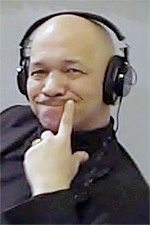
Robert Knight. Rest in Peace

Robert Knight

Robert Knight

Robert Knight, a self-described distant visitor to a strange planet who produced and hosted Earthwatch, a free-form radio program at WBAI, has died.

Robert Knight  worked as an on-air correspondent for Comedy Central’s “Daily Show,”  Pacifica’s nationally-syndicated “Flashpoints,” “Informed Dissent,” INN’s International News Net, and the Public News Service, where his reports have been heard on hundreds of stations. He recently produced a two-hour historical documentary, “The Sweet Science of Racism in Haiti,” a post-earthquake public affairs special.

Along with Dennis Bernstein, Knight was a cofounder of the groundbreaking investigative news series “Contragate/Undercurrents”, which provided daily exposes of the clandestine and military and drug operations during the contra wars in Central America. He has also served as WBAI’s News Director, “Wakeup Call” morning host, and as a fundraising copywriter. His work has been heard on Pacifica National News, Free Speech Radio News, National Public Radio, KPFA, WABC, WAMC, WEVD, WLIB, WMCA, and WNYC, and elsewhere.

As an international correspondent, Knight traveled to five continents, reporting from such hot spots as Nicaragua (he covered de contra war), Colombia (where he reported on the international drug complex), Libya (where he visited the home of Muammar Khadafy), North and South Korea (where he covered nuclear and reunification issues), and Panama (where with Manuel Noriega and coverage of the 1989 US invasion earned him the prestigious George R. Polk Award.

Other awards include the Jesse Meriton White Award for International Report, the Ethical Culture “Man of the Year” Peace Award, the Madre Padre Award (presented to a few good men by MADRE, the international feminist human rights organization), the Humanist Journalism Award (presented by the Rev. Joseph Ben-David, a colleague of Hannah Arendt), the News Reporting Award presented by Asian-Americans for Equality, and the National Association of Black Journalists’ Radio Reporting Award for his documentary series on covert activities in apartheid South Africa.

Knight’s domestic work includes travels to Tulia, Texas, where he covered the false arrests of most of the town’s African American population on fabricated drug charges, and to Albany, New York, where his reporting contributed to reform the draconian Rockefeller Drug Laws.

Knight also made numerous television appearances, including “Like It Is”, with Gil Noble and “Tony Brown’s Journal”, and news anchoring on “International News Net”. He also hosted a televised town hall discussion with the Rev Al Sharpton at the Schomberg Center for Research into African Culture.

His writing has been published in Esquire, Essence, New York Magazine, SPY, SPIN, Newsday, the New York Daily News, Los Angeles Times, Washington Post, Baltimore Sun, The Guardian, and the Premier Edition of Civil Rights journal, published by the U.S. Commission Civil Right among others.

Robert Knight, you will be missed and remembered.
Thank you for your life.

Pacifica National Board Minority Position (report)

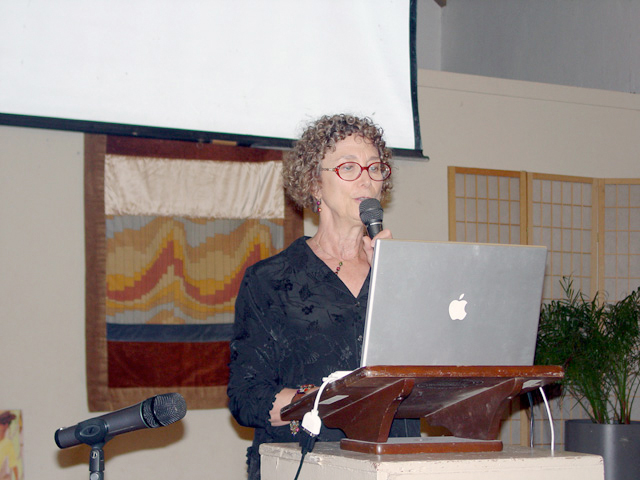
Janet Kobren talking at a fundraiser for the 2010 Gaza freedom flotilla. Ms Kobren participated in the Flotilla and organized the fundraiser

Janet Kobren talking at a fundraiser for the 2010 Gaza freedom flotilla. Ms Kobren participated in the Flotilla and organized the fundraiser

Prepared by Janet Kobren, PNB Listener Director from KPFA*

I am one of nine Pacifica Directors for Good Governance (PDGG).  Since being seated on the PNB on January 30, 2014, I and my fellow PDGG colleagues have witnessed a majority of 12 of the 22- member board put the Foundation at financial risk by violating meeting notice requirements and recklessly rushing through major personnel decisions, in the dark of executive sessions where the majority has manipulated the meeting process, misemployed Roberts Rules of Order including showing favoritism.

 They have acted without official process or documentation, and disallowed discussion or independent legal consultation on very sensitive motions (except outside the meetings, and perhaps by majority and obviously biased directors that happen to be lawyers), all of which may take the Foundation down by opening it up to possible major lawsuits, jeopardizing our insurance coverage, and losing our CPB funding and the re-licensing of WBAI.

Informed by our fiduciary responsibility, the PDGG voiced objections during all PNB meetings and proposed alternatives by submitting motion after motion, all in vain, as they were either voted down or not included in or disappeared from the agendas. Accordingly, the PDGG felt we had no other recourse but to go to the courts.

We filed a lawsuit on April 3rd at the Superior Court of California, County of Alameda, case number HG14720131. And although, for technical reasons, the judge denied us a temporary restraining order (TRO) on April 9, she nevertheless scheduled an expedited preliminary injunction hearing in Oakland on May 6.

PDGG fears that there may be no Pacifica network by the end of year and believes that outside intervention is the only way that Pacifica can be saved.

*Presented during the “Pacifica National Board Report” agenda item of the April 12, 2014 KPFA Local Station Board (LSB) meeting.

Engelhardt: Change to Pacifica’s governance must come from outside

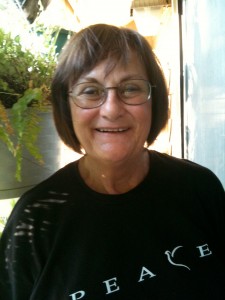
Arlene Engelhardt

Arlene Engelhardt

By Arlene Engelhardt

I have been following the recent events of the Pacifica radio network with great interest and even greater concern — even sadness. I am reading far too much misinformation — a thousand sparks, a million splinters, far too much “me-me-me,” no “we.”

I was the Executive Director of Pacifica before the latest appointee, Summer Reese. Though I had years of experience in radio in various capacities, I came to Pacifica as an outsider, and it is from that perspective, as an outsider turned insider, that I am writing.

Pacifica is not only failing, it is nearly moribund. The most recent episode unfortunately illustrates this point only too well. The recently hired executive director, Reese, was fired at a March 13 Pacifica National Board meeting. The current Chair of the Board padlocked the national office to lock out the fired ED and her staff. Using bolt cutters, the former ED gained access to the office and barred the Board Chair from entering. To date she has occupied the office 24/7, keeping the Board Chair at bay.

Not only does this represent an embarrassing and humiliating communication failure (totally unacceptable for any organization, let alone a radio network), but in a sense it underscores the utter dysfunctionality of the governance structure of Pacifica.

The Pacifica National Board has utterly failed its fiduciary duty. Embedded in the structure of the network is an even deeper problem, that of vision and commitment for the very existence of Pacifica. There is a lack of respect within the organization that is undermining and challenging the very existence of Pacifica.

I have spent many hours thinking about the keys to the future of Pacifica. I feel there is a need for a national network that represents the voices and ideas that Pacifica was founded on: to provide radio stations that promote peace and social and economic justice, to bring news and information not commonly covered, and to provide access to the local community.

The history of this country would not be the same if Pacifica had not been there during the civil rights marches, the antiwar demonstrations, the Iran/Contra hearings, women’s liberation, and so many other moments.

In these very serious, difficult times, people must have outlets to challenge and address the very real excesses of institutional power. The media power deck is stacked against people now and Pacifica needs to be heard. One reason I was proud to be associated with Pacifica was its commitment to the voices of people, peace and challenging ideas, and its refusal to bow to abusive power. The history of this country would not be the same if Pacifica had not been there during the civil rights marches, the antiwar demonstrations, the Iran/Contra hearings, women’s liberation, and so many other moments.

Pacifica has been the voice of the people, and I believe we need her even more today. There are definite advantages for a national network that extend beyond any local station. I feel that is what we must examine now — do people want a national Pacifica? What is the consensus of values that can be reached? Can there be respect and value for a national collective as well as for local stations? How do we approach this with the changes in media and technology? These are serious questions. If a national vision does not have life, then there is no national network. Frank, open dialogue by all who are concerned is necessary, with the goal of reaching a consensus on how to move forward.

In order for Pacifica to survive, the dysfunctionality of the “core,” the structure must be addressed. I am not going to go through the complex and convoluted history of Pacifica — it is much too long for this article — but suffice it to say that Pacifica, after a period of strife, dissatisfaction and lawsuits, went from a self-appointed board to a democratically elected board (20 representatives from the five Pacifica stations and two from affiliate stations).

As I understand it, the goal was to prevent anything like the coup of 1999-2001 from happening again. Obviously, this change resulted in an imbalance of power. As with the dissolution of any power base, government or otherwise, reorganization can become political and factionalized. New bylaws were written under court order. Unfortunately bylaws can be rigid, unwieldy and inappropriate, and in this case very difficult to change.

When I became Executive Director of Pacifica, I quickly realized that every station seemed to have two major factions and probably many other splinters that vied for representation. The differences among these factions were never entirely clear, but they were real and intense. I suspect they grew out of many old rivalries and disagreements, but regardless of the cause, they represented the past and usurped the energy necessary to deal with the issues of the present and the future. It was apparent that this system gave wondrous opportunities for factionalism and political bartering. Not all, but far too many members of the board represented their local station’s/faction’s interests and their personal agendas at the expense of national interests.

…the unwieldiness of the board [and] the expense of holding elections two out of every three years and the cost of four in-person board meetings each year [are] prohibitive.

The Pacifica National Board is large and unwieldy. Many members seemed to be unaware of their fiduciary responsibility and their duty to set policy, while allowing staff to manage day-to-day operations and carry out their directives. I remember too many board meetings in which most of the meeting was spent arguing over the agenda, leaving no time for discussion of important issues. I then had to postpone necessary action or implement solutions, which were then subject to revision or rejection by the board. All in all, it was extremely difficult to accomplish necessary business in such a system.

In addition to the unwieldiness of the board, the expense of holding elections two out of every three years and the cost of four in-person board meetings each year were prohibitive. Many members of the board were aware of the dysfunctionality of the structure, but the bylaws are so rigid that change from within is nearly impossible. Thus we come back to the present impasses. Under the present governance system, such dysfunctionality is inevitable.

If Pacifica is to survive, it must change its structural governance system, and that change cannot be affected from within. The revolving door of executive directors — nine in the last 10 years, and I served for three of those years — destroys any continuity. In my opinion, having the Chair of the Board serve as Executive Director for any length of time, as two of the last three EDs have done, creates a conflict of interest. The Executive Director does not have the power to make the necessary changes — and probably should not. The Executive Director’s job is to manage the operation of the network.

As I stated above, even if the PNB agrees on necessary reorganization, it is almost impossible to implement under the current bylaws. In the past, a concerned public — people who really cared about Pacifica’s survival — got involved and initiated lawsuits and other measures that affected change. So too, listeners and people from the communities served by Pacifica stations must now demand changes to Pacifica’s governance. The impasse at Pacifica is an expected result of this dysfunctionality and will continue if not changed from the outside.

Arlene Engelhardt served as executive director of Pacifica from 2009 to 2012.

This article is reprinted from Current.org, April 7, 2014.  To see it in its original form, click here.

Pacifica’s Current Financial and Licensing Problems

By Adrienne Lauby and Max Blanchet

From the perspective of Pacifica as a whole, its membership and the community the future of Pacifica looks grim.   Here are the problems:

  • Pacifica’s current, deep insolvency resulting from internal conflict, aging listenership and inability to raise enough money to pay for its operations and liquidate its liabilities .  See a chart of the financial situation here.
  • Pacifica’s conflicted relationship with the Corporation for Public Broadcasting (CPB) due to its inability to meet the CPB’s monitoring, broadcasting, diversity and sustainable governance requirements,
  • Pacifica’s inability to come to terms with its major creditor, Democracy Now! (DN!), to which it owes approximately $2 million and whose contract with Pacifica has expired and is in dire need of adjustments.
  • The possible reluctance on the part of the Federal Communications Commission (FCC) to renew the WBAI radio signal license that is coming up for renewal this year, in this climate of leadership instability.
  • Three stations are using badly-aging transmitters — in Houston, DC and NYC.  The FCC granted a rare 3rd extension on the KPFT transmitter in Houston, which is operating at 11% power, however, they are running out of time to get it fixed or replaced.  WPFW in DC can only get up to full power part of the time and is operating at reduced power most of the time.  WBAI’s transmitter in NYC is operating but wouldn’t survive a move to another location — which is necessary to reduce the $50 K monthly rental expense at its current location on the Empire State Building.  Transmitter replacement will cost $90-$120,000 each.
  •  Despite the lay-off of most of its staff, moving to a cheaper studio, and meeting an emergency deadline for over $200,000 in severance pay, the future of WBAI in NYC is a month-to-month proposition.  A sale of the station or a signal swap to a less powerful spot on the dial is still very likely.

These problems demand a mobilization of our national and local resources.   Join the Pacifica National Office Occupation and the United for Community Radio Team.